
There is nothing quite like the excitement of unboxing mail-order strawberry bare roots, imagining the sweet, red berries soon cascading over your net cups. But that excitement quickly turns to pure heartbreak when those seemingly healthy crowns awaken, only to infect your entire grow room with hidden pests or fuzzy mold. In a soil-less system, introducing unverified plant material is a massive gamble. Because your hydroponic reservoir recirculates everything, a single pathogen or microscopic spider mite hitching a ride on a bare root can spread throughout your entire system within days, choking your root zones and wiping out your indoor investment before it even establishes.
I’ve seen many growers struggle with sudden fungal outbreaks right after planting their new arrivals. If you want to build an immediate line of defense against these hidden threats, I highly recommend checking out our breakdown of the best safe mildew sprays for strawberry kits to neutralize spores before they hit your main system.
Why Mail-Order Bare Roots Cause Hidden Chaos Indoors
When nurseries grow strawberry bare roots, they typically cultivate them in vast outdoor fields. While field-grown plants develop strong genetics, they also pick up outdoor baggage: dormant insect eggs, microscopic spider mites, and fungal spores like powdery mildew or botrytis.
Once you bring these roots into an indoor hydroponic environment, the dynamic changes entirely. Your indoor tent lacks natural predators like ladybugs or predatory mites to keep pest populations in check. Combined with the consistently warm temperatures and high humidity spikes common under indoor grow lights, you create the absolute perfect incubation chamber. What was a dormant, unnoticeable spore in an outdoor field becomes a rampant, crop-killing epidemic indoors.
Step-by-Step Identification: What to Look For Under the Loupe
Before you introduce any mail-order bare roots to your system, you need to conduct a thorough inspection. Grab a 10x jeweler’s loupe or a high-powered flashlight and examine these exact areas:
- The Crown Base: Inspect the crown—the central point where the roots meet the stems. Look closely for tiny, translucent or amber-colored oval eggs tucked into the crevices.
- Root Texture and Color: Healthy bare roots should feel firm and look tan to dark brown but display a creamy white interior if gently scratched. Beware of soft, slimy, or black roots that smell like rot.
- Dormant Bud Material: Look right at the tiny emerging green leaflets. Check for ultra-fine, silk-like webbing or microscopic specks that move when disturbed.
- The Outer Scales: Peel back dead, papery leaf remnants near the crown base. This dark, damp area is where thrips or fungal spores love to hide during transit.
The 3-Step Organic Quarantine Treatment Plan
To safely clean your mail-order bare roots without introducing harsh chemicals that can destabilize your system’s pH or burn sensitive young roots, follow this strict intake protocol.
Step 1: The Hydration & Physical Wash
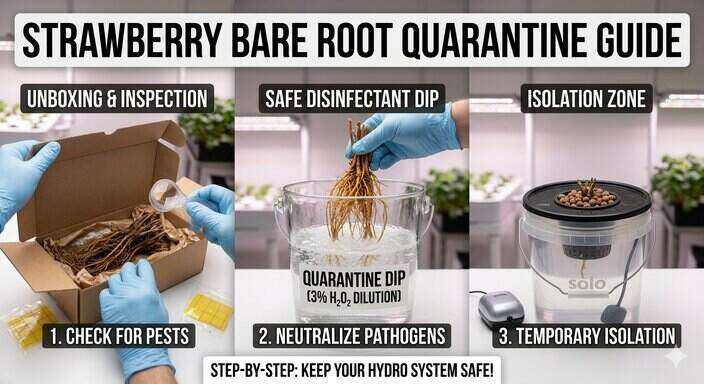
When roots arrive, they are dehydrated. Fill a clean bucket with room-temperature, dechlorinated water. Submerge the bare roots completely for 20 to 30 minutes. This wakes them up and helps loosen outdoor field soil. After soaking, gently rinse the roots under a running tap to physically wash away loose debris, insect eggs, and surface spores.
Step 2: The Organic Disinfectant Dip
To kill any remaining pathogens without messing up your future reservoir PPM, give the roots a sanitizing bath.
- The Mix: Combine 1 cup of 3% household hydrogen peroxide with 1 gallon of water.
- The Action: Submerge the entire bare root—leaves, crown, and roots—into the mixture for 5 minutes. Hydrogen peroxide safely oxidizes fungal cells and soft-bodied pests on contact, then breaks down cleanly into harmless oxygen and water.
Step 3: Temporary Solo Isolation
Do not put these roots directly into your main hydro system. Plant them temporarily into a separate “quarantine” setup using a soil-less medium like coco coir or perlite, or keep them in an isolated DWC bucket for 10 to 14 days. This isolation window allows any missed eggs to hatch or dormant spores to surface where they can be treated safely away from your main crop.
Pro Prevention Tips: Secure Your Indoor Space
Once your bare roots clear quarantine, maintain a strict perimeter to keep pests from ever getting a foothold in your room:
- Deploy Yellow and Blue Sticky Traps: Hang these at canopy level directly in your quarantine area. They act as an early-warning radar for fungus gnats, thrips, and winged aphids.
- Scrub Your Tools and Tubs: Never reuse net cups, clay pebbles, or reservoir tubs without a thorough scrubbing using a 10% bleach solution or isopropyl alcohol.
- Run Continuous Air Filtration: Ensure your grow tent uses a high-quality HEPA intake filter to trap airborne mold spores before they can land on your freshly unboxed crowns.
Frequently Asked Questions (FAQs)
1. Will dipping the roots in hydrogen peroxide shock or kill the plant?
No, a 3% hydrogen peroxide solution diluted at 1 cup per gallon is completely safe for dormant strawberry bare roots. It actually delivers a brief oxygen boost to the root zone while stripping away harmful bacteria and fungal mycelium.
2. How long should I keep new bare roots away from my main grow tent?
A minimum of 10 to 14 days is the golden rule. This time frame covers the incubation and hatching cycles of most common indoor pests, giving you plenty of time to catch an issue before it spreads.
3. Can I use neem oil as a root dip instead?
Never submerge bare roots in neem oil solutions. While neem is a great topical foliar spray for older plants, coating bare root structures in oil suffocates the fine root hairs, prevents oxygen uptake, and will likely kill the plant before it can establish.
Conclusion
Taking the time to properly quarantine your mail-order strawberry bare roots might feel like a hassle when you are eager to get growing, but it is the ultimate insurance policy for your hydroponic system. Preventing a pest outbreak is infinitely easier than trying to cure one once it integrates into your reservoir.
Expert Tip: In my indoor tent, I found that adding a tiny dose of beneficial root microbes (like Bacillus amyloliquefaciens) to the water during the final stage of the quarantine soak gives the bare roots an organic shield. These friendly bacteria colonize the root zone immediately, leaving absolutely no room for root-rot pathogens to take hold!