
Nothing kills the excitement of seeing your first white strawberry blossoms quite like a dusting of “flour” on the leaves. Powdery mildew is a relentless fungus that loves the high humidity often found around indoor hydroponic kits. If you don’t catch it early, it’ll travel from the leaves to the fruit, turning your sweet berries into fuzzy, inedible disappointments.
In a hydroponic setup, you have to be extra careful. Many standard fungicides contain heavy oils or sulfur that can wreak havoc if they drip into your water. You need a solution that stops the spores in their tracks without throwing your nutrient reservoir out of whack or leaving a nasty chemical aftertaste on your harvest.
Selection Criteria
When you’re shopping for a strawberry-safe fungicide, keep these three factors in mind:
- Potassium Bicarbonate or Bio-Fungicides: These are much safer for delicate strawberry tissue than harsh sulfur-based sprays.
- Zero Residue: Since strawberries have “nooks and crannies,” you want a spray that evaporates cleanly without leaving a film.
- OMRI Listed: Always look for the organic seal to ensure it’s safe for food-producing plants.
Best Safe Powdery Mildew Sprays for Hydroponic Strawberry Kits
1. General Hydroponics AzaMax: Protect Your Hydroponic Strawberry Canopy from Pests and Mildew Vector Stress
Finding a clean treatment that protects indoor strawberries without ruining the taste of your upcoming harvest is a balancing act. While powdery mildew is a primary concern, secondary stress from sap-sucking pests often triggers or worsens these fungal outbreaks.
In my setup, General Hydroponics AzaMax has proven to be an invaluable defense tool. It skips harsh chemical solvents entirely, relying on a food-grade formulation powered by azadirachtin A and B alongside more than 100 natural limonoids.
What caught my eye is that this natural, broad-spectrum extract won’t leave behind thick, smelly, or sticky oil residues on your ripening berries.
The real-world advantage is that it treats the plants gently while stopping pest breeding cycles in their tracks. By knocking down bugs that puncture and weaken leaves, you keep your strawberry tissue strong enough to resist invasive mildew spores.
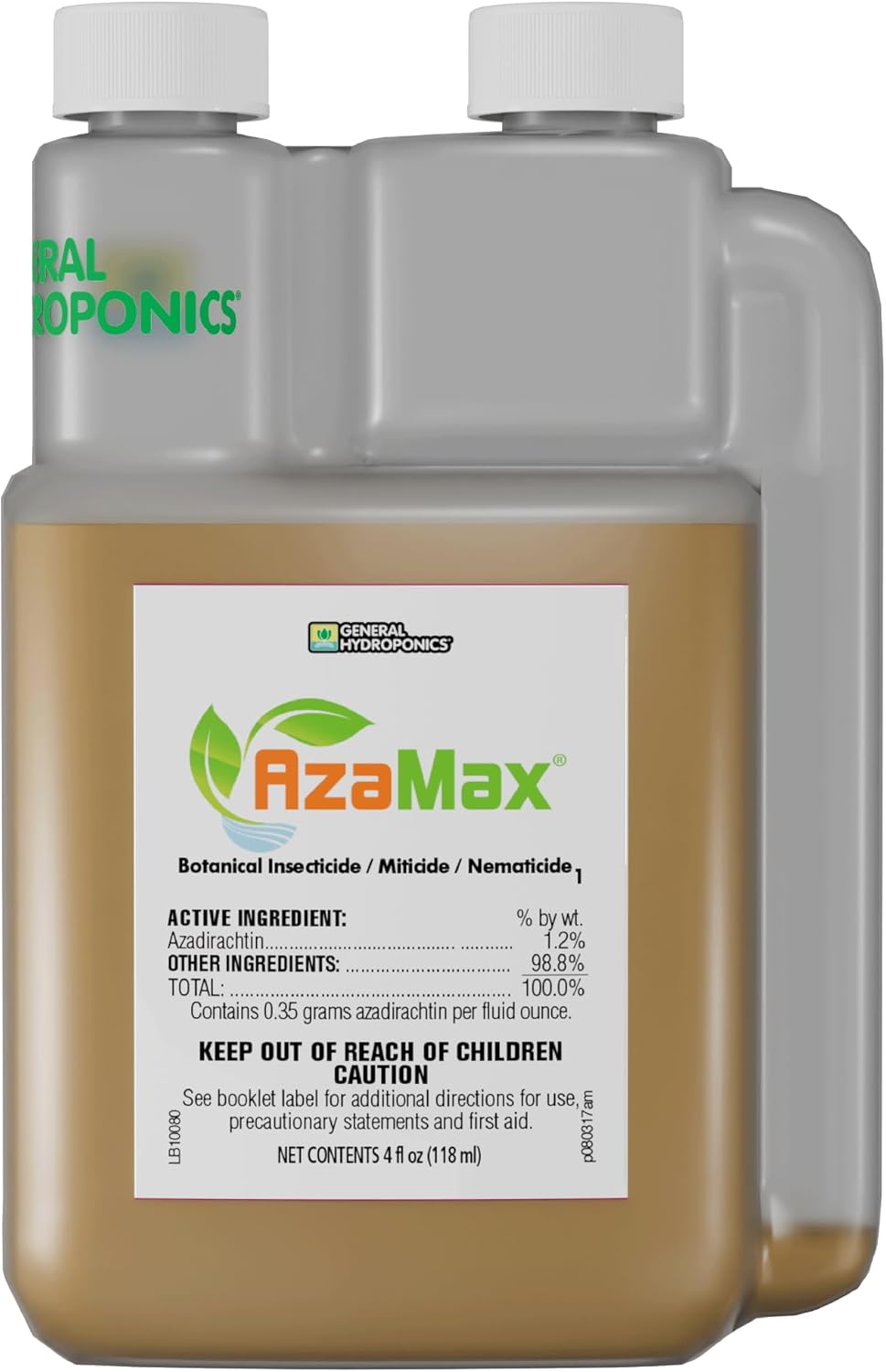
Verdict: For indoor growers seeking a reliable, chemical-free tool to shield sweet fruits and delicate foliage, this 4-ounce concentrate is well worth the investment.
Read More: Top 5 Ultrasonic Pest Repellers for Indoor Grow Tent Protection
2. Microbe Life Hydroponics pH Control Kit: Lock in Reservoir Stability to Beat Fungal Stress
When applying natural powdery mildew sprays to your hydroponic strawberry kits, the runoff can throw your water chemistry into a chaotic tailspin.
Sudden pH spikes shock the roots and block essential nutrient uptake right when your berries are fighting off infection. In my setup, keeping the Microbe Life Hydroponics pH Control Kit on hand has been a lifesaver for restabilizing the tank after a heavy foliar treatment.
What caught my eye is the premium formulation of these liquids. Crafted with deionized, UV-sterilized water, both the pH Up and Down bottles combine two distinct buffering agents alongside three core electrolytes.
This unique blend actively maintains osmotic balance within the root zone instead of violently shocking it. The real-world advantage is that it won’t clog fine lines or scale up your pumps, and the included 4-ounce liquid nutrient sample is a great bonus to replenish lost vitality.

Verdict: If you want a clean, safe, and highly reliable way to prevent nutrient lockout while managing fungal treatments, this dual-bottle kit is an essential grow-room investment.
3. Microbe Life Hydroponics pH Down: Keep Water Balanced After Mildew Spraying
When you spray a hydroponic strawberry kit with natural mildew remedies, the runoff often causes a sharp, frustrating spike in your reservoir’s pH.
If your water stays too alkaline, your strawberries can’t pull nutrients properly, causing extra stress when they are already fighting off a fungal attack. In my setup, using Microbe Life Hydroponics pH Down is the easiest way to safely drop the numbers back into the sweet spot.
What caught my eye is the clean formulation. It is mixed with deionized, UV-sterilized water and uses two distinct pH adjusters alongside three core electrolytes.
This unique blend maintains optimal osmotic balance instead of shocking your root zone. The real-world advantage is its gentle, non-clogging formula. It won’t damage delicate pump lines or drop scaling deposits into your DWC or drip system.

Verdict: If you are tired of watching your water chemistry fluctuate wildly after routine foliar maintenance, this 16-ounce bottle is a smart, highly reliable investment to keep your strawberries stable and growing strong.
4. IV Organic 3-in-1 Plant Guard: Defend Strawberry Canopies with Multi-Purpose Botanical Protection
When a sudden outbreak of powdery mildew hits your hydroponic strawberry kits, it rarely travels alone. Sucking pests often puncture the foliage first, creating perfect entry points for invasive fungal spores to take hold.
If you are searching for a highly clean, multi-layered solution, IV Organic 3-in-1 Plant Guard is a unique, OMRI-listed powerhouse. This patented formula relies on a concentrated blend of seven natural botanical oils—including cinnamon, clove, garlic, and peppermint—to shield your plants.
In my setup, what caught my eye is its incredible versatility. While it comes as a dry powder with an oil vial designed for a trunk brush-on, a couple of teaspoons diluted in water create a highly effective, aromatic foliar spray.
The real-world advantage is that it tackles insects and powdery mildew simultaneously without a single drop of harsh chemical solvents. It targets pests like aphids on contact while leaving a protective, non-toxic film over your strawberry leaves.

Verdict: Although it requires a quick mix and strain before spraying, its complete lack of chemical residues makes this organic guard an exceptional investment for pristine, indoor berries.
5. Arber Bio Protectant: Boost Immunity to Keep Strawberries Free of Powdery Mildew
When powdery mildew hits an indoor strawberry kit, traditional fungicides can leave your leaves scorched and your berries tasting chemically. You need a solution that strengthens the plant from the inside out.
In my setup, Arber Bio Protectant has become a favorite defense mechanism because it acts as a preventative biological shield using natural giant knotweed extracts rather than toxic synthetics.
What caught my eye is how this OMRI-listed concentrate triggers the strawberry’s inherent immune system. Instead of simply coating the foliage, it builds up the plant’s defenses while simultaneously working as a root stimulant and bloom booster.
The real-world advantage is that it completely suppresses powdery mildew and molds without leaving any oily, thick residue on your ripening fruits, meaning it is safe for households with kids and pets.

Verdict: Yielding over 16 gallons of mixed solution from a single 16-ounce bottle, this natural protector is a smart, budget-friendly investment to ensure clean, high-yielding indoor berry harvests.
Buying Guide: Treating Water-Based Systems
The trick with strawberries is their low-profile growth. Because the leaves sit so close to the net pots, any spray runoff goes directly into your hydro system.
I once treated a tabletop strawberry kit and didn’t realize the excess spray was pooling in the grow holes. The next morning, my water looked cloudy and the roots were slimy.
Now, I always use a piece of cardboard with a “V” notch cut out to slide around the base of the plant while I spray. This acts as a shield, ensuring the treatment stays on the foliage and out of your precious nutrient solution.
Common Mistakes
- Spraying While Flowers are Open: If you soak the blossoms, you can damage the pollen and end up with misshapen, “nubby” strawberries. Aim for the leaves only.
- Poor Airflow: You can’t spray your way out of a stagnant room. If you don’t add a small clip-on fan to move the air, the mildew will return 48 hours after you spray.
- Mixing Too Strong: Strawberry leaves are surprisingly thin. I always start with a half-strength dose to make sure the plant doesn’t show signs of burn before going full strength.
FAQs
Is it safe to use near LED grow lights? Yes, but timing is vital. If you spray while the lights are on, the droplets act like tiny lenses and can burn the leaf surface. Always spray right after the lights go out so the leaves can dry in the dark.
Does it affect the water pH? Many mildew sprays are alkaline (especially potassium bicarbonate). If it leaks into your reservoir, your pH will spike, leading to nutrient lockout. Check your reservoir levels immediately after treating your plants.
Can I spray the berries themselves? While many organic sprays are “safe,” they can affect the flavor if used too close to harvest. I try to stop all spraying once the berries start turning red.
How often should I treat the plants? For an active breakout, once every 5 to 7 days is usually the sweet spot. Once the white spots are gone, a “preventative” spray once every two weeks is a smart move.
Conclusion
Powdery mildew is a headache, but it doesn’t have to be the end of your strawberry season. By picking a bio-fungicide and keeping it out of your water supply, you can keep your plants thriving.
Pro Tip: If you see a single leaf with white spots, snip it off immediately and put it straight into a plastic bag. Don’t shake it! Spores are airborne, and a “gentle” pruning can accidentally send millions of spores flying toward your healthy plants.