
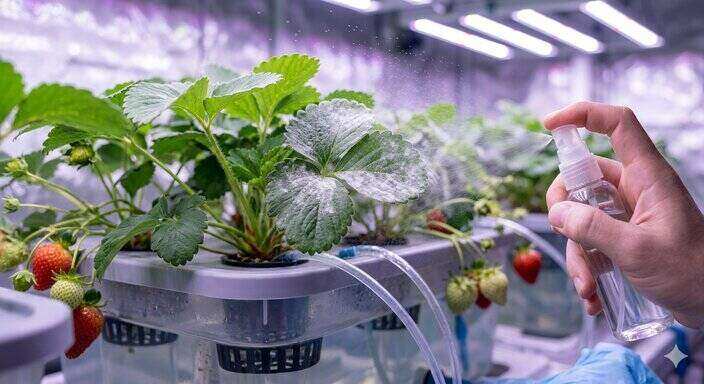
There is nothing quite as defeating as watching your vibrant hydroponic strawberry canopy suddenly lose its luster. One day your plants are pushing out lush runners, and the next, you notice a strange, ghostly white dust creeping across the leaves. In an indoor soil-less system, this isn’t just an aesthetic issue—it is a fast-moving crisis. Because your reservoir recirculates water and your plants sit in close proximity, a fungal outbreak can sweep through your entire system, choking out photosynthesis and devastating your berry yields before you even harvest your first flush.
If you are currently battling this white dust, you are likely hunting for clean, fast-acting remedies. While potassium bicarbonate is a fantastic tool, it needs to be applied as a foliar application rather than dumped directly into your reservoir. For a complete breakdown of the safest, most effective commercial options available to indoor growers, be sure to check out our comprehensive guide on the best powdery mildew sprays for hydroponic strawberries to halt the fungus without stalling your crop.
Why Powdery Mildew Thrives in Indoor Hydroponics
In my years as a consultant, I’ve seen many growers struggle with fungal issues, often wondering how a clean, soil-less setup got infected in the first place. The truth is, indoor grow rooms are practically a paradise for fungal spores like powdery mildew ($Podosphaera$ $aphanis$).
Unlike outdoor gardens where harsh winds, intense UV rays, and natural bio-competitors keep fungi in check, an indoor grow tent offers a highly controlled, stagnant environment. Strawberries naturally transpire a heavy amount of moisture, creating a microclimate of high humidity right around the leaf surface. If your oscillating fans aren’t dialed in perfectly, this stagnant, humid air allows microscopic spores—which can easily hitch a ride into your room on contaminated clones or your own clothing—to land, germinate, and penetrate the leaf tissue within hours.
Step-by-Step Identification: Spotting the Fungus Early
To save your strawberry crop, you have to catch the infection before it reaches the berries. Grab a loupe or flashlight and check your system daily using these pointers:
- Look Under the Foliage: The infection almost always starts stealthily on the undersides of older, lower leaves. Look for faint, circular patches of white or light-gray fuzzy growth.
- Inspect the Leaf Margins: As the fungus takes hold, the edges of the strawberry leaves will begin to upwardly curl, exposing the fuzzy undersides.
- Check the Stems and Petioles: If left unchecked, the white, talcum-powder-like coating will advance up the leaf stems (petioles) and onto the flower buds.
- Examine the Fruit: Infected blossoms will turn brown and die, while developing berries will look dusty, remain small, hard, and completely unpalatable.
Critical Warning: Do not mistake dried nutrient salt crusting near your net cups or rockwool cubes for powdery mildew. Fungal powder sits strictly on the living plant tissue and easily wipes off with a gentle rub of your thumb.
The 3-Step Organic Treatment Plan
If you have confirmed a powdery mildew outbreak, don’t panic. You can treat your plants effectively without dumping harsh chemicals into your clean water loop.
Step 1: Prune and Isolate
Carefully snip off the most heavily infected leaves. Do this gently—shaking the plant will send millions of microscopic spores airborne, infecting the rest of your tent. Immediately place the clipped leaves into a plastic bag, seal it, and remove it from your grow area.
Step 2: Mix a Safe Potassium Bicarbonate Foliar Spray
Potassium bicarbonate works by drastically altering the pH on the surface of the leaf, making it instantly toxic to fungal spores while remaining safe for the plant.
- The Recipe: Mix 1 tablespoon of potassium bicarbonate and a few drops of organic castile soap (which acts as a spreader-sticker) into 1 gallon of filtered water.
- The Rule: Never pour this mixture directly into your hydroponic nutrient tank. Dumping it into the reservoir will completely destabilize your carefully balanced pH, bind up your liquid nutrients, and cause severe root shock.
Step 3: Spray Correctly and Safely
Apply the mixture using a fine-mist pressure sprayer. Thoroughly coat the tops and bottoms of all leaves until the solution just begins to drip. Always apply foliar sprays right before your grow lights turn off for the night; spraying under intense LED or HID lights can cause water droplets to act like magnifying glasses, leading to severe leaf burn.
Pro Prevention Tips: Keep the Spores Away
Once your canopy is clean, your primary goal is keeping it that way. In my indoor tent, I found that maintaining these habits drastically reduces the risk of reinvention:
- Optimize Air Circulation: Install at least two multi-speed oscillating fans—one positioned above the canopy and one below the gutter or tray level—to eliminate stagnant air pockets.
- Maintain Humidity Targets: Keep your relative humidity (RH) between 40% and 50% during the flowering and fruiting phases. Use a dedicated dehumidifier if your room spikes when the lights click off.
- Sterilize Your Tools: Always dip your pruning shears in a 70% isopropyl alcohol solution between cuts and before moving from one plant tray to another.
- Filter Incoming Air: Use a high-quality HEPA or carbon intake filter on your tent’s ventilation fan to catch airborne fungal spores before they ever step “foot” inside your grow room.
Frequently Asked Questions (FAQs)
1. Can I use regular baking soda instead of potassium bicarbonate?
Yes, you can use sodium bicarbonate (regular baking soda) in an emergency at a similar dosage. However, potassium bicarbonate is highly preferred by veteran growers because it delivers beneficial potassium to the foliage, whereas excess sodium can build up and stress delicate strawberry tissue.
2. How often should I apply the potassium bicarbonate spray?
For an active infection, spray your plants once every 5 to 7 days until the white spots stop appearing. For preventative maintenance in a high-humidity environment, a light spray once every two weeks is usually sufficient.
3. Will this foliar spray affect the flavor of my strawberries?
If applied correctly during vegetative and early flowering stages, it will not affect the taste. However, avoid heavily soaking fully ripe, mature red strawberries directly, as the slight alkaline residue can leave a mild, chalky aftertaste if not washed before eating.
Conclusion
Battling powdery mildew in a hydroponic strawberry setup is undeniably stressful, but it is entirely manageable when you use the right organic techniques. By keeping your treatments on the leaves and out of your main nutrient reservoir, you protect your root zone while successfully eradicating the fungus.
Expert Tip: Always measure your reservoir’s pH and PPM the morning after a heavy foliar spray. Even though you aren’t spraying the tank directly, a small amount of runoff can sometimes drip down the net cups; a quick check ensures your root environment stays perfectly balanced for maximum berry production!