
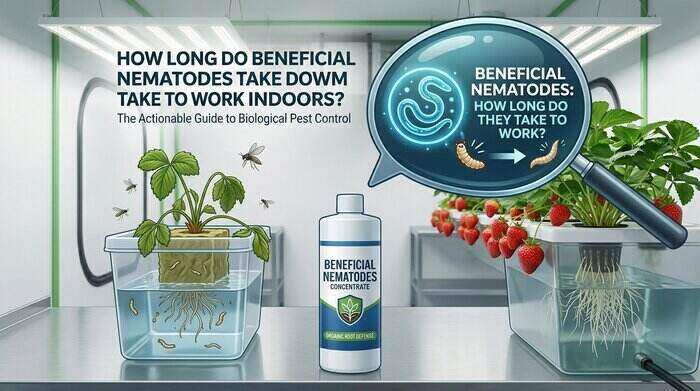
Few things match the frustration of watching a vibrant indoor garden suddenly stall. You notice a lush leaf begin to droop, or a strange, unexplainable yellowing spreads across your greens. In a soil-less setup, root-bound pests like fungus gnat larvae or thrips pupae are an invisible nightmare. Because hydroponic mediums provide a cozy, humid environment, these sub-surface invaders can multiply rapidly, chewing through delicate root hairs and opening the door to devastating fungal infections.
If left unchecked, they can completely destroy your root system and ruin your entire crop. When you are looking for a biological, chemical-free way to eradicate these pests at the source, understanding how long beneficial nematodes take to work is the key to timing your application perfectly and saving your roots before the damage becomes irreversible.
Why Soil-less Systems Face Pest Explosions
Many home growers assume that ditching traditional soil means escaping pest problems entirely. Unfortunately, I’ve seen many growers struggle with infestations that are actually worse indoors.
Indoor grow rooms lack natural predators like ladybugs, parasitic wasps, or predatory mites. Once a single pest hitches a ride inside—whether on a contaminated clone, your clothes, or through an open window—it finds a climate-controlled paradise. The consistent humidity and warmth of an indoor tent act like an incubator. Without a natural biological check-and-balance system, a minor issue transforms into a full-blown infestation in a matter of days.
Step-by-Step Identification: Where to Look
To stop the damage early, you need to know exactly what signs to look for and where these pests hide. Check your system daily using this checklist:
- Near the Rockwool or Coco Coir: Inspect the top of your growing medium under a magnifying glass. Look for tiny, translucent larvae with black heads crawling near moist zones.
- Under the Leaves: Turn over your lower foliage. Look for microscopic specks, fine webbing, or silvery patches that indicate thrips or mites are feeding on leaf sap.
- The Nutrient Reservoir: Watch the waterline of your reservoir or net pots. Fungus gnats love the high humidity and will often hover just above the water level.
- Root Texture and Color: Healthy hydroponic roots should be bright white and crisp. If you notice localized browning, slimy sections, or roots that break easily, pests are actively feeding on the root tips.
The 3-Step Organic Treatment Plan
When dealing with food crops or indoor living spaces, harsh chemical pesticides are completely off the table. They can easily destabilize your nutrient reservoir’s pH or throw your PPM levels entirely out of whack. Use this safe, biological action plan instead:
1. Flush and Balance the System
Before introducing biological control agents, perform a clean water flush to clear away dead organic matter and pest waste. Refill your reservoir with fresh water and balanced nutrients. Ensure your water temperature stays between 18°C and 21°C to support optimal root health and biological activity.
2. Apply Beneficial Nematodes Directly to the Medium
Introduce microscopic beneficial nematodes (Steinernema feltiae or Heterorhabditis bacteriophora) directly into your rockwool, coco, or clay pebbles. These microscopic roundworms actively hunt down and destroy pest larvae from the inside out. Never run nematodes through fine drip lines or fine mesh filters, as they will clog the system and trap the organisms; instead, hand-pour the mixture over the base of each plant.
3. Deploy Sticky Traps for Adult Management
Nematodes exclusively target the juvenile larvae hidden in your growing medium. To stop the cycle completely, hang yellow sticky traps just above the medium surface and blue sticky traps near the top canopy. This dual approach catches emerging adult gnats and thrips before they can lay a fresh batch of eggs.
Pro Prevention Habits to Keep Pests Out
Once your system is clean, consistency is your best shield. In my indoor tent, I found that adopting these simple habits keeps pest populations at zero:
- Sanitize Your Tools: Clean your trimmers, measuring cups, and reservoir pumps with food-grade hydrogen peroxide between every single crop cycle.
- Filter Incoming Air: Install a fine-mesh insect screen or an active HEPA filter over your grow tent’s intake fan to stop flying pests from being sucked indoors.
- Quarantine New Genetics: Never introduce a gift clone or a retail starter plant directly into your main grow room. Keep it isolated in a separate space for at least 14 days to monitor for hidden pests.
Frequently Asked Questions
Do beneficial nematodes survive in pure water hydroponics?
Yes, but they require a structured holding medium to be effective. In pure Deep Water Culture (DWC) or Nutrient Film Technique (NFT) systems, they can wash away too quickly. They work best when applied directly to support mediums like coco coir, rockwool cubes, or gravel beds where larvae congregate.
Will nematodes alter my reservoir’s pH or PPM?
Not at all. Because beneficial nematodes are live biological organisms and not chemical compounds, they will not alter your water chemistry, cause nutrient lockout, or fluctuate your EC/PPM levels.
Can I use hydrogen peroxide and nematodes at the same time?
No, do not mix them. Hydrogen peroxide is a powerful oxidizer that will instantly kill beneficial nematodes. If you need to use a peroxide root flush to treat root rot, complete the flush first, wait at least 48 hours for the peroxide to dissipate into oxygen and water, and then introduce your nematodes.
Keeping the Momentum
Managing an indoor garden is all about controlling the micro-environment. While a sudden pest outbreak can feel overwhelming, shifting your approach from chemical elimination to biological balance makes all the difference.
Expert Tip: When applying beneficial nematodes indoors, always turn off your high-intensity grow lights or apply them right at the start of your dark cycle. Nematodes are highly sensitive to intense UV light and direct heat; giving them a few hours of darkness allows them to safely burrow deep into your growing medium to find their targets.