
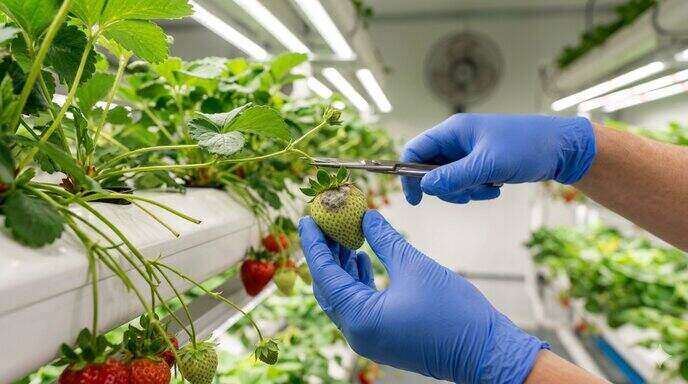
Few things beat the excitement of seeing a heavy cluster of hydroponic strawberries developing on the vine, only for that joy to turn to pure frustration when a fuzzy grey or white mold blankets the fruit right before it ripens. In a soil-less system, this isn’t just a minor cosmetic issue; it is an aggressive, system-wide threat. Because your indoor grow space acts as an incubator, fungal pathogens can spread via air currents from a single infected crown to your entire canopy in less than 48 hours, ruining your hard-earned harvest and clogging up high-density growing spaces with millions of invisible spores.
I’ve seen many growers struggle with losing entire flushes of berries to these stubborn molds right at the finish line. If you are currently dealing with fuzzy patches on your crops, check out our tested recommendations on the most effective organic powdery mildew treatments for hydroponic berries to knock out the fungus safely without contaminating your reservoir water.
Why Fruit Rot Explodes in Indoor Hydroponic Systems
When you move strawberry cultivation indoors, you remove the harsh external elements that naturally keep fungal spores at bay. Outdoors, direct sunlight (UV rays), predatory microbes, and heavy wind currents prevent fungal colonies from establishing.
Indoors, your hydroponic setup creates a unique set of vulnerabilities:
- The Microclimate Micro-Trap: As strawberry fruits develop and hang low near the net cups, rockwool, or grow channels, they create a highly humid dead-air zone underneath the foliage.
- Transpiration Spikes: Strawberries pump out heavy moisture through their leaves. If your tent lacks aggressive ventilation, the relative humidity right at the cluster level skyrockets past 70%, creating the exact dew point needed for spores to germinate on the fruit skin.
- Lack of Bio-Competitors: A clean, sterile indoor system lacks the diverse beneficial fungi and bacteria that naturally compete with pathogens, leaving your developing berries completely defenseless if a spore hitches a ride inside.
Step-by-Step Identification: Catching the Mold Early
Fungal pathogens like Gray Mold (Botrytis cinerea) and Powdery Mildew (Podosphaera aphanis) are masters of stealth. Use this checklist during your daily canopy walk to spot the early warning signs:
- Under the Flower Petals: Check the base of newly opening blossoms. Look for tiny, water-soaked brown spots on the stems (pedicels) holding the flower.
- The “Tan Splotch” Stage: Inspect green, unripe berries for dull, light-brown spots. The fruit tissue here will feel slightly soft or leathery compared to the firm, healthy green areas.
- The Velvet Blanket: Look closely at the crevices near the green leafy cap (calyx) of the strawberry. You will see a fine, velvety gray or white fuzz starting to bridge the gap between the leaf and the fruit skin.
- The Dust Cloud Test: Gently tap a suspect leaf or dead flower bud near the rockwool under your grow lights. If you see a tiny puff of smoke-like dust rise into the air, you are looking at active, spore-releasing mycelium.
The 3-Step Organic Fungal Treatment Plan
If mold has breached your grow room, you must act fast. This targeted strategy clears out the infection without altering your nutrient tank’s delicate pH or spiking your PPM.
Step 1: Surgical Pruning and Bagging
Do not just rip infected berries off the vine. Rough handling releases millions of spores into your ventilation stream. Instead, grab sharp, sterile shears, gently place a plastic zip-top bag directly over the moldy fruit or cluster, and snip the stem inside or right at the mouth of the bag. Seal it immediately and throw it in an outdoor trash bin.
Step 2: Deploy a Potassium Bicarbonate Foliar Shield
To stop the spread to remaining healthy fruit, alter the surface pH of your canopy to make it unlivable for fungi.
- The Recipe: Dissolve 1 tablespoon of potassium bicarbonate and 1/4 teaspoon of organic liquid castile soap into 1 gallon of warm, filtered water.
- Critical Warning: Never pour this solution directly into your hydroponic reservoir. It is strictly a topical foliar treatment. Adding it to your reservoir will bind up your calcium and magnesium nutrients, cause massive pH swings, and instantly shock your root system.
Step 3: Low-Impact Application Timing
Mist your entire canopy thoroughly, paying special attention to the underside of leaves and around the fruit clusters. Always apply this spray right after your grow lights turn off. Spraying under intense, running indoor lights will burn the delicate leaf tissue and cause spotting on your developing berries.
Pro Prevention Tips: Guarding Your Future Harvests
In my indoor tent, I found that simple, disciplined adjustments to environment and hygiene do 90% of the heavy lifting when it comes to preventing mold:
- Target the Under-Canopy Airflow: Position at least one small, clip-on oscillating fan to blow air directly across the top of your reservoir or grow channels, right beneath the hanging fruit clusters.
- Drop the Nighttime Humidity: Fungi love the cool, damp period when lights turn off. Program your dehumidifier to lower your grow room humidity to 45% – 50% RH during the dark cycle.
- Defoliate Aggressively: Remove old, non-productive lower leaves that shade the fruit. Opening up the center of your strawberry crowns allows light penetration and maximum air exchange.
- Sterilize Trays and Tools: Wipe down your reservoir lids, net cups, and cutting tools with a 70% isopropyl alcohol solution between every fruit harvest to prevent cross-contamination.
Frequently Asked Questions (FAQs)
1. Is it safe to eat strawberries that have had the mold washed off?
Absolutely not. By the time you see the fuzzy gray or white whiskers on the outside of a strawberry, the microscopic roots of the fungus (mycelium) have already burrowed deep into the center of the fruit. Throw them away.
2. Will hydrogen peroxide spray treat moldy berries?
A diluted 3% hydrogen peroxide spray (around 1-2 ounces per gallon of water) is excellent for sterilizing leaves and killing surface spores on contact. However, it will not cure a berry that is already rotting internally from the inside out.
3. Why did my strawberries get moldy even though my room humidity is low?
Even if your tent’s main hygrometer reads a perfect 45% humidity, the stagnant air trapped directly under a dense layer of large strawberry leaves can easily hover around 80% humidity. It is the microclimate around the fruit itself that matters most.
Conclusion
Losing a beautiful flush of indoor strawberries to mold right before harvest is an incredibly frustrating milestone, but it is an obstacle every veteran grower learns to conquer. By keeping your air moving, managing the microclimate around your canopy, and keeping treatments strictly on the leaves, you can protect your main system while ensuring a clean, abundant harvest.
Expert Tip: Keep a close eye on your reservoir’s water temperature. In my consulting work, I’ve noted that when reservoir temps climb above 72°F (22°C), root dissolved oxygen drops, stressing the plant from the bottom up. A stressed strawberry plant produces lower levels of natural antifungal compounds, making its fruit far more susceptible to airborne mold attacks!