
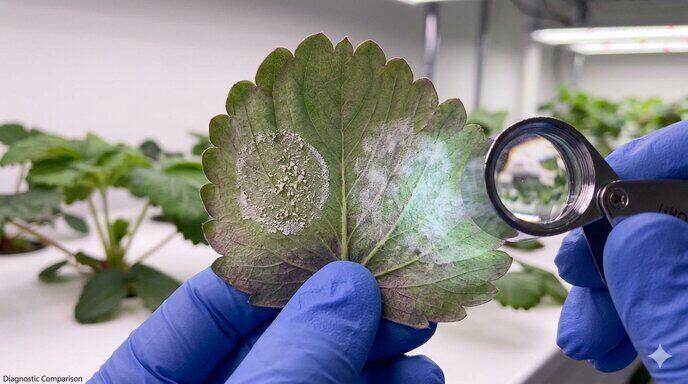
Few things match the sheer frustration of watching a thriving hydroponic strawberry patch suddenly develop pale spots, curl along the edges, or lose its glossy finish. In a soil-less system, localized leaf issues can quickly mirror or mask destructive fungal pathogens. While an indoor grower might cross their fingers and assume that the white, crusty film on their strawberry foliage is just a harmless splash of dried nutrient salt from a top-off, guessing wrong can be devastating. If that powdery residue is actually an active fungal attack, it will choke out your canopy, cripple photosynthesis, and ruin your berry yields. Mistaking a spreading disease for simple salt buildup gives the pathogen the perfect window to destroy your entire system.
The most dangerous mistake you can make is treating a fungal infection by modifying your water reservoir, or ignoring a nutrient burn while fungal spores quietly take root. I’ve seen many growers struggle with dead systems because they couldn’t tell structural mineral crust apart from a living infection. If your diagnostic checks reveal a true fungal outbreak on your crop, read our comprehensive breakdown of the most effective safe powdery mildew sprays for strawberry kits to eliminate the mold without unbalancing your water.
Why Nutrient Stains and Powdery Mildew Look Alike Indoors
In an indoor hydroponic setup, your plants are constantly exposed to high-EC (Electrical Conductivity) nutrient solutions and intense grow lights. When water drops splash onto leaves during reservoir changes or top-feeding cycles, the intense heat from your grow lights evaporates the water rapidly. This leaves behind a stark white, chalky ring of crystallized calcium, magnesium, and potassium salts.
At the same time, the lack of UV sunlight and natural air currents indoors creates the perfect environment for strawberry powdery mildew (Podosphaera aphanis) to flourish. Because this specific fungus starts as faint, patchy, white circular spots that look identical to dried salt splatters, growers often misdiagnose the issue. Turning up your fan speed to dry out what you think is a salt splash will actually launch millions of microscopic fungal spores straight into your room’s airflow, spreading the disease to every healthy strawberry clone in your tent.
Step-by-Step Identification: Minerals vs. Mycelium
To confidently determine whether your strawberry kit needs a simple leaf rinse or an aggressive organic defense, use a 10x magnifier and follow this diagnostic checklist:
- The Tactile Rub Test: Gently rub the white residue between your bare fingertips. Dried nutrient salts feel coarse, gritty, and crystallized, scraping away from the leaf surface like fine sand. Powdery mildew feels soft, velvety, and micro-fluffy, smearing easily across the leaf without flaking off.
- The Location Checklist: Look closely at where the white spots are forming. Nutrient stains only appear on the upper surfaces of older leaves where water can physically splash. Powdery mildew almost always starts as patchy spots on the shady, high-humidity undersides of the leaves before creeping upward.
- Leaf Margins and Curling: Inspect the structure of the leaf tissue. Salt crust leaves the leaf completely flat and structurally sound. Fungal infections irritate the plant tissue, causing the strawberry leaf edges to cup, roll upward, and show purplish blushing on the undersides.
- The Water Rinse Reaction: Spray a spot with a single mist of plain, distilled water. A crusty nutrient stain will dissolve or dry down into the exact same shape. Powdery mildew will temporarily vanish when wet, but its cottony, thread-like web will reappear in the exact same spot within a few hours.
The 3-Step Safe Organic Treatment Plan
If your diagnosis points to an active powdery mildew infection rather than salt buildup, you must eliminate it using methods that will not pollute your nutrient reservoir or alter your water’s pH and PPM:
Step 1: Wipe and Isolate the Canopy
Carefully wipe down the infected leaves with a damp sponge soaked in pure water to trap loose spores before they can fly. If a leaf is completely covered in white fuzz, use sterile pruning shears to clip it off at the base. Place the clippings immediately into a plastic bag and remove them from your indoor space.
Step 2: Apply an Alkaline Potassium Bicarbonate Shield
Mist your strawberry foliage thoroughly with an organic potassium bicarbonate spray. This natural mineral drastically changes the pH on the leaf surface, making it instantly toxic to fungal cell walls. It provides a clean, root-safe alternative that will not leave greasy chemical residues that block your water pump filters.
Step 3: Introduce a Bio-Fungicide Colony
Once the leaves are completely dry, apply a foliar spray containing Bacillus amyloliquefaciens, a beneficial bacterium. These friendly microbes will colonize the strawberry leaves, systematically consuming any remaining microscopic spores and preventing the mildew from returning.
Pro Prevention Habits for Spotless Hydroponic Berries
To keep both messy mineral stains and destructive fungal spores out of your indoor grow room, implement these professional cleanroom habits:
- Use a Long-Neck Watering Funnel: When adding water or concentrated nutrients to your strawberry kit, always use a narrow, long-necked funnel placed directly into the reservoir port. This simple mechanical habit completely eliminates leaf splashing.
- Install an Inline HEPA Intake Sock: In my indoor tent, I found that placing a fine particulate filter sleeve over the fresh air intake fan stops airborne wild fungal spores from ever entering the grow room.
- Maintain Steady Canopy Airflow: Keep a small, oscillating clip fan blowing a steady breeze right across the top of your net cups. Keeping the air moving prevents the stagnant, humid micro-climates that mold spores require to germinate.
- Sanitize Pruning Tools Every Single Time: Never use your trimming scissors on different plants without wiping the blades with isopropyl alcohol. This stops you from acting as a mechanical carrier for invisible crop diseases.
Frequently Asked Questions
Can dried nutrient spots on leaves cause powdery mildew?
No, dried nutrient salts are sterile minerals and cannot spontaneously generate a fungal disease. However, leaving wet nutrient splashes on your leaves creates a damp, high-humidity surface that makes it much easier for airborne powdery mildew spores to land, stick, and germinate.
Will powdery mildew ruin my strawberry roots if it drops into the reservoir?
Strawberry powdery mildew is an obligate parasite that can only live and feed on green, living plant tissue like leaves, runners, and blossoms. It cannot survive down inside your dark, flooded root zone or open water channels.
Is it safe to eat strawberries that have had powdery mildew on their leaves?
As long as the white fungus has not physically spread onto the red berry itself, the fruit remains edible. However, you must wash the berries thoroughly with clean water before eating to remove any stray spores or organic treatment residues.
Conclusion
Learning to differentiate between crusty mineral salt splatters and early powdery mildew spots is a vital skill for any serious indoor grower. By using simple physical checks like the tactile rub test and looking at leaf undersides, you can stop a fungal crisis early, keep your canopy clean, and secure a heavy harvest of sweet, healthy strawberries.
Expert Tip: To permanently eliminate the guesswork in your grow room, add a tiny drop of food-grade yucca extract to your foliar sprays. Yucca acts as a natural wetting agent. If the white spot on your leaf is just a mineral splash, the yucca will help the water break down and dissolve the salt crust entirely, leaving the leaf clean after a single rinse cycle!