
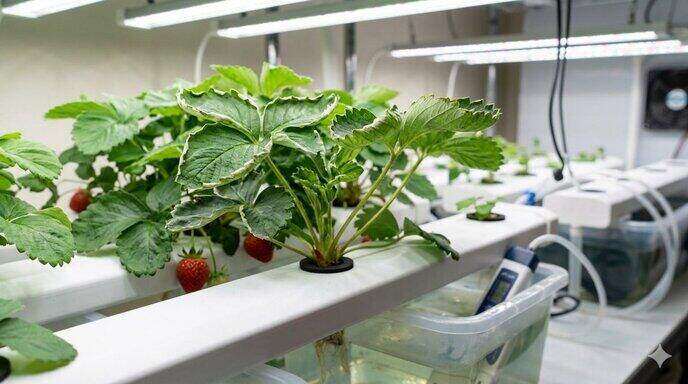
Few things match the sheer frustration of watching a prized hydroponic strawberry kit suddenly lose its vigor as the vibrant green leaves begin curling upwards, exposing their pale undersides. In a clean, soil-less system, small environmental changes can quickly trigger a systemic crop crisis. While many indoor growers assume that upward leaf curling is just a minor watering glitch, it is often the first visible symptom of a aggressive fungal pathogen. Strawberry powdery mildew (Podosphaera aphanis) targets the plant’s delicate foliage, crippling its ability to photosynthesize and distorting new growth. If left unchecked, this fungus will systematically invade your developing blossoms, destroying your entire berry harvest before the fruit can even set.
The most common mistake is waiting for a thick, white fuzzy coating to appear before taking action. I’ve seen many growers struggle with stunted plants and lost yields because they ignored the initial structural leaf curl until the infection became deeply entrenched. To halt this aggressive pathogen in its tracks without introducing toxic chemicals into your living space, check out our field-tested guide to the best safe powdery mildew sprays for hydroponic strawberry kits to protect your crop instantly.
Why Upward Leaf Curling Happens in Indoor Hydroponics
Indoor hydroponic kits offer an optimized environment for berries, but they also create unique micro-climates that can foster fungal outbreaks.
First, the lack of natural air currents and UV sunlight allows microscopic fungal spores to settle undisturbed on leaf surfaces. Second, indoor setups frequently suffer from localized humidity spikes. While your room’s overall humidity might seem perfect, stagnant pockets of damp air naturally become trapped inside the dense, low-lying canopy of strawberry plants. Finally, many home growers unknowingly introduce the fungus into their clean systems by purchasing contaminated bare-root runner clones from external commercial greenhouses. Once inside, the fungus uses the plant’s internal moisture to expand, causing the leaf edges to cup and roll upward as the infected tissue on the underside contracts.
Step-by-Step Identification: Pinpointing the Fungal Threat
To confirm that your curling leaves are caused by a true fungal infection rather than a simple nutrient imbalance, turn off your grow lights and inspect these specific areas using a bright flashlight:
- The Undersides of the Curled Leaves: Flip over the cupped leaves and look closely at the lower surface. Look for faint, patchy, off-white or translucent networks of thread-like fungal mycelium spreading across the veins.
- The New Foliage and Runner Tips: Check the youngest, tender leaflets emerging from the center crown. If the infection is active, these new leaves will look severely distorted, twisted, and tightly puckered.
- The Stems and Petioles: Inspect the long, thin stems supporting the leaves. Look for small, purplish-red or dark brown blotches, which indicate where the fungus has structurally breached the plant’s outer skin.
- The Base Near the Rockwool Cubes: Examine the lower canopy leaves resting closest to your damp growing media. This high-moisture zone is typically where the initial airborne spores land and germinate.
The 3-Step Safe Organic Treatment Plan
You can completely eliminate strawberry powdery mildew without applying harsh synthetic fungicides that can drip into your water line, scorch your sensitive leaves, or throw off your reservoir’s delicate pH and PPM levels:
Step 1: Prune and Destroy Infected Foliar Tissue
Gently clip off the most severely curled and distorted leaves using sharp, sterile shears. Do not shake or roughhouse the plant while cutting, as this will launch millions of microscopic spores into your grow room’s airflow. Safely bag and remove these clippings from your indoor space immediately.
Step 2: Apply an Alkaline Potassium Bicarbonate Wash
Spray the remaining foliage thoroughly with a reservoir-safe, food-grade potassium bicarbonate foliar spray. This natural mineral compound instantly alters the pH on the leaf surface, making it highly alkaline. This sudden shift physically collapses the fungal cell walls on contact without leaving toxic chemical residues behind.
Step 3: Deploy a Bio-Fungicide Microbe Shield
Once the leaves dry, mist your canopy with an organic bio-fungicide containing beneficial bacteria like Bacillus amyloliquefaciens. These specialized micro-organisms live safely on the leaf surface, actively consuming any leftover fungal spores and creating a biological shield that prevents new infections from taking hold.
Pro Prevention Habits for Spotless Strawberry Kits
Once your strawberry canopy is clean and recovering, implement these professional cleanroom habits to ensure the fungal pathogen never returns:
- Sterilize Your Pruning Tools Constantly: Never move your trimming scissors from plant to plant without dipping the blades in isopropyl alcohol. This simple step prevents you from mechanically spreading invisible spores across your system.
- Install a dedicated Canopy Fan: In my indoor tent, I found that positioning a small, low-wattage clip fan to blow a gentle, continuous breeze directly across the top of the strawberry net cups completely eliminated the stagnant humidity pockets where mold thrives.
- Sterilize the Growing Trays Between Batches: When resetting your strawberry kit for a new season, completely flush the system and scrub the plastic channels with a 10% food-grade hydrogen peroxide solution to kill dormant spores.
- Run a Quality In-Line Air Filtration System: Equip your grow room’s fresh air intake duct with a fine carbon filter or HEPA filter sleeve to catch wild airborne spores before they can ever reach your indoor plants.
Frequently Asked Questions
Will upward leaf curling affect my strawberry’s root system?
Powdery mildew lives and reproduces exclusively on the green top-growth of your strawberry plants, meaning you will not find the fungus growing down inside your water reservoir or rockwool cubes. However, the severe damage it inflicts on the leaves will ultimately starve the root system of energy, causing the roots to turn brown and stall.
Can I use baking soda instead of potassium bicarbonate?
While household baking soda (sodium bicarbonate) can kill fungal spores, sodium is highly toxic to hydroponic strawberry roots in even small amounts. If baking soda drips off your leaves and enters your nutrient tank, the sodium accumulation will quickly cause severe root burn. Always stick to clean-rinsing potassium bicarbonate formulas.
How often should I spray my strawberry kit to completely clear the mildew?
Fungal spores hatch incredibly fast under indoor grow lights. To completely break the pathogen’s reproductive lifecycle, you must repeat your safe organic foliar treatments every 5 to 7 days for at least three consecutive weeks, ensuring you coat the leaf undersides entirely.
Conclusion
Upward leaf curling on hydroponic strawberries is a serious warning sign that requires swift, decisive action. By accurately identifying the early signs of powdery mildew, opening up your canopy’s airflow, and applying safe, root-safe organic washes, you can easily protect your indoor ecosystem and ensure a heavy harvest of clean, sweet berries.
Expert Tip: To create a simple, permanent early-warning system in your grow room, place a small digital hygrometer directly inside the lowest tier of your strawberry canopy, right above the reservoir lid. If this localized micro-climate climbs above 70% relative humidity while your main room reads much lower, you are in the fungal danger zone. Manually thinning out a few healthy center leaves will immediately drop that humidity level and stop mold from ever starting!