
Few sights break an indoor gardener’s spirit faster than watching a lush, thriving canopy suddenly develop droopy leaves, mysterious yellow spots, or an unexplainable wilt. In a highly controlled indoor setup, early issues can cascade through your entire room before you finish your morning coffee. While many growers expect root troubles to come from bad nutrients, the true culprit is often a sudden explosion of tiny, flying pests. Fungus gnats might look harmless as they buzz lazily near your lights, but their subsurface larvae chew directly through sensitive root hairs. In soil-less setups, this feeding behavior strips away root vitality and leaves young plants completely defenseless against systemic rot.
The most common trap for beginners is throwing random household pantry items at a serious infestation while the real damage happens out of sight. I’ve seen many growers struggle with persistent bug problems because they relied on outdated myths rather than targeted, scientifically proven solutions. If you want to cut through the noise and deploy an immediate, highly effective visual defense, read our comprehensive field-tested review of the best yellow sticky cards for indoor gardens to clear your canopy air safely.
Why Flying Pests Bypass DIY Kitchen Remedies Indoors
Indoor hydroponic and soil-less environments are custom-engineered for heavy plant performance. We pack our rooms with intense grow lights, stagnant moisture pockets, and stable, warm air. Unfortunately, this climate is also an optimal breeding ground for fungus gnats. Lacking wild predators like rove beetles or unpredictable outdoor weather, a single pair of gnats will multiply into thousands in a matter of weeks.
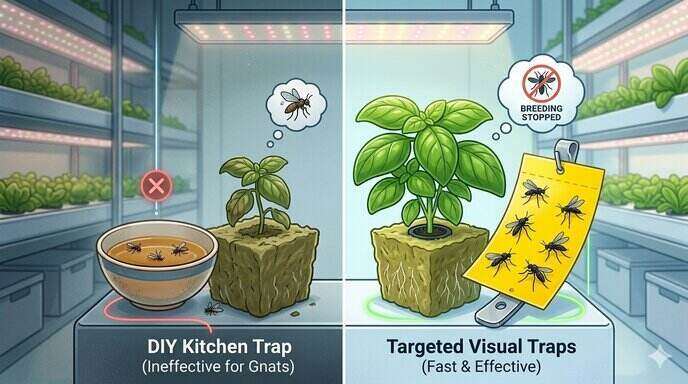
When desperate growers notice these flying swarms, they often rush to mix up a bowl of apple cider vinegar (ACV) and dish soap. While ACV works wonders for fruit flies—who are biologically driven to seek out fermenting, sugary rotting fruit—fungus gnats are completely indifferent to vinegar. Fungus gnats are drawn exclusively to the smell of decaying root matter, soil fungi, and specific light spectrums. Leaving a bowl of sour vinegar next to your plants does nothing but waste time while subsurface larvae continue to multiply and feast on your root architecture.
Read More: Step-by-Step Guide to Getting Rid of Flying Soil Bugs Indoors
Step-by-Step Identification: Locating Your Target
Before you can launch an effective counterattack, you must confirm exactly what bug is raiding your indoor garden. Grab a magnifying glass and inspect these high-traffic pest zones:
- Directly Atop the Rockwool or Coco Plugs: Look for erratic, jerky movements. Fungus gnats prefer running and crawling across damp growing media rather than long sustained flights.
- Floating in the Corners of the Tray: Check the stagnant air pockets under your lower fan leaves. You will see tiny, dark-bodied insects with long legs resembling miniature, clumsy mosquitoes.
- The Base of the Stem: Look at the interface where your plant meets the starter cube. If you notice a faint, shiny trail or tiny, translucent maggots with stark black heads, your root zone is heavily compromised.
- The Subsurface Root Tips: Carefully check your root system’s color and structure. Healthy roots must be pearly white and crisp. If they look stubby, short, or show slimy brown tips, gnat larvae are actively feeding.
The 3-Step Safe Organic Treatment Plan
To wipe out both flying adults and subsurface larvae without introducing chemical residues that drift onto your leaves or destabilize your reservoir’s delicate pH and PPM balances, follow this precise plan:
Step 1: Deploy Targeted Spectrum Lures
Hang yellow adhesive cards horizontally directly over your starter plugs and lower canopy line. Because fungus gnats possess photoreceptors specifically tuned to seek out yellow light wavelengths, they will fly directly onto the glue and stick. This instantly stops adult flies from diving back into your media to drop fresh batches of eggs.
Step 2: Inoculate Your Substrate with BTI Microbials
Mix a mild, safe dose of Bacillus thuringiensis israelensis (BTI) into your clean watering reservoir. Drench your growing medium thoroughly. BTI is a naturally occurring soil bacterium that produces crystals that target and dissolve the intestinal lining of gnat larvae when eaten, yet it is 100% safe for your roots and leaves your reservoir water pristine.
Step 3: Eliminate Surface Moisture Access
Fungus gnat eggs require stagnant, high-saturation moisture to successfully hatch. If you are growing in soil or coco, let the top two inches of your medium dry out completely between feeds. For active hydroponic setups, ensure your top-feed lines are not leaving pooling puddles on the top faces of your rockwool slabs.
Pro Habits to Keep Flying Pests Out Permanently
Once your grow space is completely clear, build these strict cleanroom protocols into your daily maintenance routine to prevent future pest breaches:
- Filter Your Air Intakes: Cover all fresh air intake fans with a fine insect mesh or specialized HEPA intake socks to physically block wild pests from being sucked into your indoor room.
- Isolate All Outside Materials: In my indoor tent, I found that never walking into the grow space wearing the same clothes I wore while working in my outdoor garden completely eliminated accidental pest tracking.
- Keep an Active Sticky Grid: Leave a few fresh yellow cards in your room at all times, even when you think the bugs are gone. They serve as an invaluable early-warning system that catches the very first scout fly before a colony can form.
- Clean Spills and Trays Instantly: Never allow runoff nutrient water to sit in your drainage trays. Stagnant, warm nutrient water grows algae rapidly, creating an irresistible feeding ground for wandering pests.
Frequently Asked Questions
Why do fruit flies look so similar to fungus gnats?
While they look similar from a distance, fruit flies have thicker, tan-colored bodies and prominent red eyes, and they congregate around kitchen waste. Fungus gnats have slender, dark black bodies, long legs, and are found exclusively crawling on or hovering directly over damp plant media.
Will sticky traps alone cure my gnat problem?
No. Sticky traps only capture the winged, airborne adults. While this is crucial for breaking the breeding loop, roughly 90% of the infestation lives as eggs and larvae hidden deep inside your root zone. You must combine traps with biological drenches like BTI to achieve total eradication.
Can I drop apple cider vinegar directly into my hydroponic reservoir?
Absolutely not. Never pour vinegar or household dish soaps into your hydroponic system. Vinegar is a strong acetic acid that will instantly tank your reservoir’s pH, while soaps dissolve the delicate, microscopic root hairs your plants use to drink nutrients.
Conclusion
When it comes to speed and efficiency in an indoor garden, yellow sticky cards beat apple cider vinegar every single time. By understanding how these pests see and breed, you can deploy professional, water-safe biological controls that eliminate the infestation cleanly without risking your plant’s internal health.
Expert Tip: If you are dealing with an exceptionally stubborn gnat colony that keeps bouncing back, check your irrigation lines for hidden algae buildup. Algae acts as a premier food source for gnat larvae. Running a food-grade, low-dose hydrogen peroxide clean through your lines between crops strips away this hidden food supply, ensuring newly hatched pests starve to death before they can ever reach your roots.