
There is nothing quite as defeating as walking through a commercial facility only to find your highly optimized, clean canopy suddenly showing pale spots or unexplainable leaf wilting. In a commercial soil-less facility, small mistakes scale rapidly. Because hydroponic systems push crops to grow at maximum speed using bare, water-submerged root networks, they lack the woody toughness of outdoor plants. A localized pest outbreak can quickly turn into a facility-wide crisis, systematically draining your profit margins in days. When bugs establish a foothold in an indoor farm, traditional soil remedies fail; you need a strict, structured protocol to protect your water loop and your bottom line.
The biggest pitfall for commercial facility managers is a lack of proactive defense, leaving them to blindly dump unvetted chemicals on a late-stage breakout. I’ve seen many growers struggle with out-of-control infestations because their spraying routine inadvertently fouled their reservoir tanks or caused severe leaf burn under high-intensity grow lights. To instantly halt a sudden outbreak without ruining your facility’s water profile, read our comprehensive evaluation of the most effective organic spider mite killers for water culture to neutralize invasive colonies safely and keep your facility compliant with clean, agricultural standards.
Why Indoor Commercial Facilities Invite Pest Explosions
Indoor commercial grow rooms are built to mimic a perfect, high-yield paradise. We dial in exact temperatures, steady relative humidity, and targeted airflow patterns to optimize photosynthesis. Unfortunately, this climate-controlled glass-and-steel environment is also an enemy utopia.
Without the natural outside elements like seasonal frost, torrential downpours, or wild predatory insects, common pests multiply unchecked at an exponential rate. Many commercial teams introduce these destructive invaders themselves through contaminated cuttings from third-party suppliers or on the shirts and pants of workers who walk through outdoor agricultural spaces before arriving at work. In a massive indoor hydroponic facility, the dense layout of nitrogen-rich leaves allows a tiny colony to spread like a wildfire before your morning scouting team even spots the initial damage.
Read More: How to Stop Fungus Gnats from Ruining Indoor Seedlings?
Step-by-Step Scouting: Where Pests Hide in Your Farm
To intercept bugs before they trigger a massive, expensive yield loss, your cultivation staff must follow a rigid diagnostic protocol. Equip your team with a 10x jewelers loupe and inspect these target zones every single morning:
- The Undersides of Shaded Fan Leaves: Flip over the large, low leaves closest to the net pot. Sucking insects avoid intense, direct overhead LED or HPS rays, hiding below to lay clusters of microscopic, translucent eggs.
- The Rockwool Base or Coco Mat Inlets: Inspect the moist surface area of your growing cubes or slabs. Fungus gnats and root aphids swarm these damp irrigation points to lay larvae that feast directly on young root hairs.
- Main Stem Branching Voids (Crotches): Look closely at the tight nooks where a branch splits from the stalk. Fine, shimmering silk webs mean an active spider mite population is already expanding upward.
- Bare Root Mass Vitality: Periodically open inspection windows on your channels or buckets. Healthy roots must be pearly white; if they exhibit a stringy, slimy brown film, dirty spray runoff has already entered the water line and triggered root decay.
The 3-Step Commercial Organic Treatment Protocol
If your scouting team catches an active breakout, you must deploy a non-chemical, water-safe counterattack immediately to contain the damage without causing your system’s pH or PPM levels to crash:
Step 1: Secure the Root Zone Shield
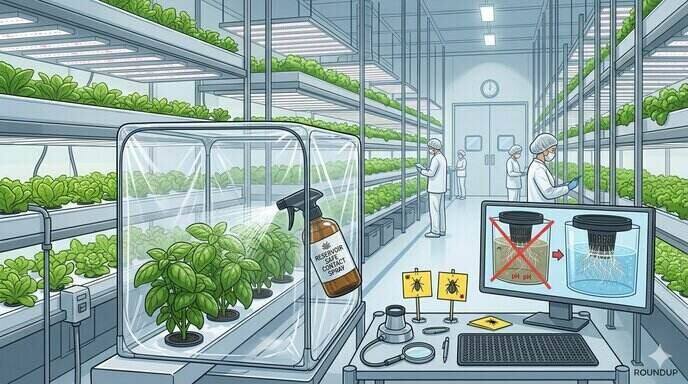
Before turning on any spray machinery, your staff must physically isolate the reservoir loop. Have your team seal the top of every single net pot or irrigation channel using a clean, durable plastic wrap or custom-fit plastic collars. This guarantees that zero liquid overspray drips down into your clay pebbles, rockwool, or central nutrient water tanks.
Step 2: Apply a Soluble Contact Spray Under the Dark Window
Mix a fresh batch of a clean, residue-free botanical contact insecticide. Drench your canopy thoroughly using a fine-mist pressure sprayer, ensuring 90% of the mist hits the undersides of the leaves. This must be applied exclusively during your crop’s night cycle. Spraying under intense commercial lights will turn liquid droplets into lenses, causing severe cosmetic leaf scorch and irreversible cell damage.
Step 3: Enforce a Sequential Knockdown Routine
A single application only kills living adult insects, leaving hidden eggs untouched. To completely break the pest breeding cycle, you must repeat this targeted spray sequence once every three days for a minimum of two full weeks. This systematic rhythm guarantees you catch newly hatched larvae before they reach reproductive age.
The Pro Commercial IPM Prevention Checklist
Transition your facility from a reactive cleanup mindset to a proactive fortress by building these absolute daily habits into your standard operating procedures (SOPs):
- Install Dedicated HEPA Air Intake Filters: Fit all incoming ventilation shafts with high-efficiency insect screens or HEPA filter socks to stop flying pests from being vacuumed into your clean rooms from outdoors.
- Grid the Canopy with Yellow Sticky Cards: Hang double-sided yellow adhesive cards directly above your reservoir channels and at the entry doors. These won’t cure a full outbreak, but they serve as an invaluable early warning system for your scouting crew.
- Enforce a Strict Biosecurity Wardrobe Policy: In my indoor tent, I found that requiring anyone entering the space to change into facility-only scrubs, wear hairnets, and sanitize their shoes in a footbath eliminated nearly all external vector paths.
- Alcohol-Sanitize All Trimming Tools: Mandate that all pruning shears and harvest knives are wiped down with a 70% isopropyl alcohol solution between benches to stop cross-contamination.
Frequently Asked Questions
Will organic foliar treatments affect my water line’s pH?
As long as your team carefully installs physical shields over the net pots before spraying, your reservoir water will remain completely unaffected. However, if organic botanical oils or soaps slip past the barrier, they will degrade in your water, triggering severe bacterial blooms that strip dissolved oxygen and tank your pH overnight.
Can we add systemic biological controls directly to a central reservoir?
No, never add concentrated systemic pesticides or foliar soaps directly to your main water tank. Because hydroponic setups lack a soil ecosystem to filter out heavy active ingredients, your bare root walls absorb them at toxic rates, stunting plant growth and leaving chemical residues inside your consumer-ready crops.
How do we clean an irrigation line after an accidental pesticide exposure?
If an organic oil or chemical spray accidentally drips into your system, immediately drain the entire affected loop. Flush the plumbing lines with pure, pH-balanced water mixed with a food-grade system cleaner to strip away oily films before reintroducing a fresh nutrient batch.
Conclusion
Sustaining a pest-free environment in a large-scale commercial indoor hydroponic farm requires absolute discipline and a deep respect for your water chemistry. By prioritizing physical root zone isolation, utilizing fast-dissipating contact washes, and enforcing strict biosecurity habits, your facility can completely bypass devastating crop losses.
Expert Tip: If your team ever spots a localized pest outbreak on just a few plants in a long NFT or DWC channel, don’t rush to spray the entire zone. Instantly slide a portable clear plastic isolation tent over those specific affected plants. This creates a miniature localized bio-dome, allowing you to heavily treat the problem spot with organic contact sprays without risking a single drop of drift or overspray hitting the rest of your clean commercial room.