
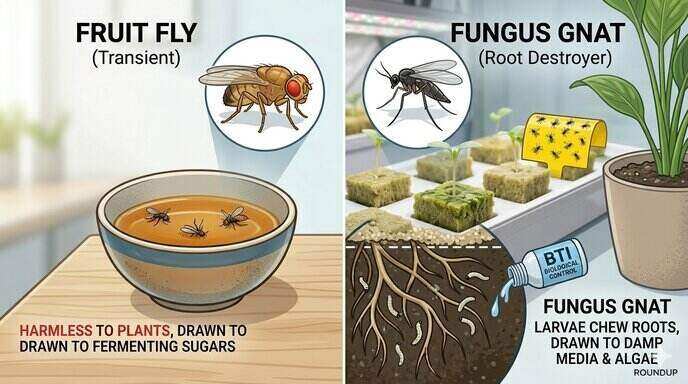
Few things match the frustration of watching a vibrant indoor garden suddenly stall out, drop lower leaves, or display unexplainable yellow spots across the canopy. In an indoor, soil-less system, minor issues escalate into systemic failures with terrifying speed. While many growers immediately suspect nutrient lockouts, the true threat is often floating right before their eyes. When a cloud of tiny, dark insects begins buzzing around your plants, misidentifying them can be a fatal mistake. True fruit flies are harmless to your vegetation, but fungus gnats harbor a sinister secret: their ravenous subsurface larvae feed aggressively on delicate root hairs, severing your plants’ lifelines and inviting devastating root rot pathogens.
The most common error is treating every small, airborne bug with the same generic remedy while hidden root destruction continues entirely unchecked. I’ve seen many growers struggle with declining plant health simply because they wasted weeks trying to bait root-destroying pests with kitchen vinegar. To clear the air immediately and stop these aerial invaders from depositing a new generation of destructive larvae into your media, check out our field-tested breakdown of the best flying insect catchers for small grow rooms to safeguard your canopy safely.
Why Insect Identification Fails in Controlled Hydroponic Rooms
Indoor hydroponic setups are precisely engineered to push plant growth to its absolute maximum. We seal our rooms to lock in intense warmth, high relative humidity, and consistent moisture profiles. Unfortunately, this sterile, predator-free environment also acts as an uncompromised incubator for pests. Without wild elements like wind, heavy rain, or predatory insects to check their lifecycles, a tiny handful of bugs will completely overrun a tent in a matter of weeks.
When a grower spots small flies hovering near the reservoir, they often assume they are fruit flies drawn in from the kitchen. However, fruit flies require fermenting sugars from overripe fruits or open trash bins to survive; they have zero interest in your plants. Fungus gnats, on the other hand, are specifically drawn to the damp root zones, decaying organic matter, and micro-algae layers that form on wet rockwool, coco coir, or clay pebbles. Misidentifying a gnat outbreak as a fruit fly issue means deploying traps that get completely ignored while thousands of subterranean larvae continue to hollow out your plants’ root architecture.
Read More: Why Do Hydroponic Towers Get Spider Mites so Fast?
Step-by-Step Identification: Spotting the Physical Differences
To save your root systems before permanent stunting sets in, you must know exactly what to look for and where to look. Grab a jeweler’s loupe and inspect these specific anatomical and behavioral indicators:
- Body Shape and Color (Look at the Canvas): Inspect the resting bugs on your pots. Fruit flies have stout, rounded, tan-to-light-brown bodies with prominent bulbous red eyes. Fungus gnats look like microscopic, smoky-black mosquitoes with long, slender legs and tiny clear wings.
- Flight Patterns (Look in the Air): Watch how they move through the canopy. Fruit flies are strong, deliberate flyers that zip quickly through space. Fungus gnats are incredibly weak, jerky flyers that drift aimlessly and spend most of their time crawling directly across the damp media.
- The Root Zone Media Face: Gently peer into the cracks of your rockwool plugs or topsoil. If you spot tiny, translucent-white maggots with a stark, shiny black head capsule, you are looking directly at fungus gnat larvae. Fruit fly larvae will never live in your clean plant substrate.
- Root Texture and Color: Lift your starter cubes or inspect the drainage holes. Healthy roots should be crisp, bright white, and fuzzy. If your roots look nibbled, stubby, or show slimy brown tips, gnat larvae are actively feeding on them.
The 3-Step Safe Organic Eradication Plan
If your diagnostic checks confirm you are dealing with root-chewing fungus gnats rather than transient fruit flies, deploy this water-safe action plan immediately to wipe them out without altering your reservoir’s pH or PPM:
Step 1: Catch the Winged Parents Fast
Secure yellow adhesive cards horizontally right at the substrate line across your trays. Because fungus gnats are biologically hardwired to seek out the specific light spectrum reflected by these yellow cards, they will fly straight into them and stick. This instantly breaks the breeding loop by stopping adults from depositing fresh egg clutches.
Step 2: Drench the Core with Microscopic Allies (BTI)
Inoculate your next watering cycle with a targeted dose of Bacillus thuringiensis israelensis (BTI). Soak your potting soil, coco, or rockwool thoroughly. BTI is a naturally occurring, organic bacterium that produces a specialized protein that paralyzes and destroys the digestive tracts of gnat larvae when consumed, yet it remains 100% safe for live roots and preserves your water chemistry.
Step 3: Enforce a Strict Dry Barrier
Fungus gnat eggs require constant, saturated surface moisture to hatch. For coco or soil-based plants, let the top two inches of media dry out completely between feeds. For active hydroponic systems, shield the top faces of your rockwool slabs from your grow lights using plastic covers to dry out algae layers and block adult insects from reaching the damp interior.
Pro Prevention Habits for Cleanroom Environments
Once your indoor garden is completely clear of pests, integrate these professional biosecurity protocols into your daily routine to ensure they never return:
- Isolate All New Plants: Treat every incoming clone or houseplant as an active biosecurity threat. Quarantine them in a completely separate room for 14 days to ensure no hidden subsurface eggs hatch into your main grow space.
- Seal Media Supplies Tightly: In my indoor tent, I found that immediately transferring opened bags of coco, perlite, or potting soil into heavy-duty plastic storage totes with gasket-sealed lids permanently stopped wandering insects from nesting in my fresh supplies.
- Increase Substrate Surface Airflow: Position a small, clip-on oscillating fan to blow a steady, firm stream of air directly across the top rims of your plant containers. This turbulent air barrier makes it physically impossible for weak-flying gnats to land and breed.
- Sanitize Trays and Reservoirs Weekly: Never let runoff water pool or sit stagnant in your drainage trays. Clean up spills immediately to starve out the microscopic algae films that wandering pests use as a primary food source.
Frequently Asked Questions
Can I use apple cider vinegar traps to catch fungus gnats?
No. Apple cider vinegar traps only work for fruit flies. Because fungus gnats are drawn to fungal odors and decaying root matter rather than fermenting sugars, they will completely ignore vinegar bowls while continuing to breed in your plant’s soil.
Do adult fungus gnats bite or damage my plant’s leaves?
No, the flying adult gnats do not have mouthparts capable of chewing leaves or biting humans. They are solely focused on reproduction. However, their presence is a clear warning that hundreds of destructive, root-eating larvae are thriving right beneath the surface.
How long does it take to completely clear a gnat infestation?
Because a typical gnat lifecycle spans roughly 3 to 4 weeks depending on your room’s temperature, you must maintain your yellow sticky traps and apply your organic BTI drenches consistently for a minimum of 21 days straight to destroy every subsequent generation as it emerges.
Conclusion
Telling the difference between fruit flies and fungus gnats is the crucial pivot point between a thriving indoor harvest and a ruined root system. By accurately identifying your target, ignoring ineffective kitchen remedies, and deploying root-safe, yellow visual traps alongside natural microbials, you can keep your indoor garden pristine, safe, and completely pest-free.
Expert Tip: If you want an immediate, foolproof way to confirm your identification without guessing, place a fresh, raw slice of white potato directly on top of your plant’s growing medium. Leave it overnight. If you have fruit flies, the slice will be empty in the morning. If you have fungus gnats, the subterranean larvae will swarm to the bottom of the potato slice to feed, giving you a clear, unmistakable look at the subsurface infestation!