
Few things match the sheer frustration of watching a vertical hydroponic tower lose its vibrant green luster as leaves suddenly display yellow pinprick spots and begin to wilt tier by tier. In a soil-less vertical setup, an isolated pest issue quickly transforms into a systemic canopy disaster. Without soil to act as a buffer, these microscopic, sap-sucking arachnids target your plant’s vascular system, draining cellular fluids and stalling growth almost overnight. Because vertical systems pack lush foliage closely together, a spider mite colony can travel across your entire room before you notice the first strand of silk. If you do not act quickly, these pests will completely ruin your harvest.
The biggest mistake home growers make is panicking and spraying heavy, chemical pesticides that inevitably drip down into the water lines, burning the roots and ruining the crop. I’ve seen many growers struggle with total system failure because they didn’t know how to physically clear the canopy safely. To gain immediate control of your grow room without throwing off your water chemistry, look at our tested breakdown of the organic spider mite treatments for vertical systems to safely collapse the infestation.
Why Washing Is Essential for Indoor Vertical Towers
Indoor vertical towers are vulnerable to rapid spider mite explosions for three specific reasons: the rising heat from grow lights creates a hot, dry micro-climate at the top tiers; there are zero natural outdoor predators to disrupt their egg-laying cycle; and contaminated greenhouse clones easily introduce invisible hitchhikers.
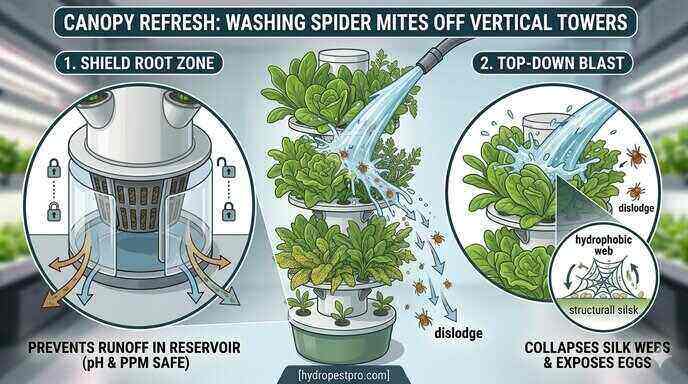
While liquid sprays are necessary to break the pest cycle, applying sprays onto a canopy choked with silk webs is completely useless. Spider mite webbing is naturally hydrophobic—meaning it repels liquids. The silk forms a protective umbrella over the adult bugs and their eggs. Physically washing your vertical system first is the mandatory structural step that destroys these silken tents, breaks their reproductive momentum, and exposes the remaining survivors so your organic treatments can actually hit their target.
Step-by-Step Identification: Where to Look Before You Wash
Before turning on the water, you must locate the primary colony centers to ensure you do not accidentally wash the pests onto clean plants. Grab a 10x jeweler’s loupe and inspect these exact zones:
- The Undersides of Upper Leaf Canopies: Flip over the leaves closest to your top lights. Look for tiny, moving speck-sized dots and clusters of round, translucent eggs.
- The Neoprene Inserts and Net Cups: Look right at the base of the plant stem where it meets the rockwool or grow plugs. Mites often hide in these tight structural crevices to escape intense light.
- The Leaf Petiole Junctions: Inspect the V-shaped joints where leaf stems branch off from the main central tower body. This is where mites spin their initial highway lines to crawl between tiers.
- Bleached Leaf Spots (Stippling): Look at the top surface of the leaves for thousands of yellow or white pinprick markings. If a leaf is heavily stippled, it is a major colony hub.
Read More: What happens if you spray too much neem oil on plants?
The 3-Step Manual Washing Action Plan
This manual washing protocol removes up to 90% of active pests instantly without draining soapy water into your nutrient solution or destabilizing your system’s pH and PPM levels.
Step 1: Isolate and Shield Your Nutrient Reservoir
Before splashing a single drop of water, you must prevent pest-filled runoff from entering your nutrient tank. If your vertical tiers are modular, remove the infected plant sections completely from the tower to wash them in a sink or shower. If your tower is one solid piece, wrap clean plastic wrap or heavy-duty garbage bags around the base of the plant stems and over the top of the net pots. This creates a physical shield that forces the dirty wash water to drain outward onto the floor rather than dripping down into your root zone.
Step 2: Perform the Top-Down Pressure Wash
Using a clean pump sprayer or a detachable sink wand set to a firm, lukewarm stream, spray your plants starting from the highest tier and working downward. Focus the water pressure directly upward at a 45-degree angle against the undersides of the leaves. This physical impact blasts away the webs, strips away adult mites, and dislodges thousands of unhatched eggs, safely flushing them down your sink drain or into a collection bucket.
Step 3: The Target Leaf Wipe-Down
For broad-leaf crops like strawberries or kale, use a soft, damp microfiber cloth or sponge to gently wipe down the remaining leaves from the base of the stem to the tip. This final manual wipe crushes any stubborn mites that managed to cling to the leaf surface during the water blast and clears away any lingering leaf debris so your plants can breathe.
Pro Prevention Tips to Keep Your Tower Clean
Once your vertical tower is clean, build these strict sanitation habits into your routine to ensure the mites never return:
- Sterilize the Plastic Frame Between Runs: When resetting your tower for a new crop, completely disassemble the plastic tiers and scrub the injection-molded tracks with a 10% food-grade hydrogen peroxide solution to kill hidden eggs.
- Run fine Mesh Intake Socks: In my indoor tent, I found that fitting a micro-mesh filter sleeve over the fresh air intake duct completely stops wandering outdoor spider mites from being sucked inside by your fans.
- Monitor the Top-Tier Humidity: Keep a digital hygrometer mounted at the absolute highest point of your vertical system. Ensure the relative humidity stays between 55% and 65% during growth, as dry air triggers the mite’s fastest reproductive speeds.
- Wear Clean Grow Room Clothing: Never walk straight into your indoor hydroponic room after working in an outdoor garden or visiting a commercial nursery. Always change your shirt to avoid acting as a human transport vehicle for hitchhiking pests.
Frequently Asked Questions
Will washing my plants with plain water mess up their roots?
Not if you shield your net cups correctly. As long as you use plastic wrap to keep the high-pressure runoff water out of your rockwool plugs and your central nutrient channel, your root system will stay perfectly dry, safe, and balanced.
Can I use a garden hose outside to wash my vertical system?
I highly advise against this. Taking an indoor hydroponic system outside to hose it down introduces a massive risk of exposing your clean root zones to wild aphids, thrips, root rot spores, and even more spider mites from your yard. Keep your washing steps completely indoors using a bathroom shower, bathtub, or utility sink.
How soon after washing can I apply my organic sprays?
Wait until the leaf surfaces have completely air-dried—usually about 1 to 2 hours depending on your grow room’s airflow. If you apply your organic suffocation sprays while the leaves are still wet with wash water, you will dilute the product, making it far less effective at killing the remaining pests.
Conclusion
Washing your plants is the ultimate way to reset a vertical tower during a spider mite crisis. By physically destroying their hydrophobic silk webs and flushing away the bulk of the colony, you clear the path for your organic treatments to do their job flawlessly without endangering your delicate hydroponic reservoir.
Expert Tip: After completing your canopy wash, place a ring of fresh yellow sticky traps around the central base of your vertical tower. As the remaining stray mites try to crawl back up the plastic framework to reach the green tiers, they will get permanently stuck on the traps, giving you an effortless, visual way to verify that your cleanup was a total success!