
Few things match the sheer frustration of watching a prized hydroponic system lose its deep green luster, only to notice a strange, faint film coating the upper canopy leaves. In an indoor, soil-less environment, small structural oversights quickly spiral into full-blown crop emergencies. While a home grower might initially pray that the pale, powdery buildup on their leaves is just harmless particulate settled from an intake fan, misidentifying this symptom can be catastrophic. If that layer isn’t household debris, you are looking at the defensive silken fortresses of spider mites. These sap-sucking arachnids will pierce your plants’ cell walls, drain their photosynthetic energy, and rapidly stall your entire system’s growth.
The costliest mistake you can make is ignoring early silken strands, assuming your room is simply due for a dusty wipe-down. I’ve seen many growers struggle with total crop devastation because they let “dust” breed unchallenged for a week too long. If you suspect those fine threads are actually an active breeding ground for pests, don’t wait for your canopy to choke out—check out our vetted breakdown of the natural spider mite killers for vertical towers to knock them down safely and protect your system.
Why “Dust” and Webbing Become Confused Indoors
An indoor hydroponic room is a high-energy environment. Inline fans pull in outside air constantly, and oscillating fans keep the air moving over the canopy. Because of this continuous air movement, static electricity builds up on broad green leaves, acting like a magnet for lint, skin cells, and ambient household dust.
However, this same high-airflow, high-intensity lighting setup creates micro-climates of warm, dry air right around the upper foliage—the precise environmental trigger that spider mites need to launch an invasion. Because initial spider mite webbing is incredibly thin, sparse, and non-sticky, it collects floating dust particles out of the air. This creates a confusing hybrid: a layer of actual dust held suspended in mid-air by microscopic pest silk. If you assume it’s just a dusty grow room and turn up your fans, you will actually help the mites spread faster by providing them with wind currents to drift across to neighboring plants.
Step-by-Step Identification: The Visual & Tactile Checklist
To confirm whether you need a simple air filter upgrade or a serious biological counterattack, grab a high-magnification jeweler’s loupe, turn off your main grow lights temporarily, and look for these telltale signs:
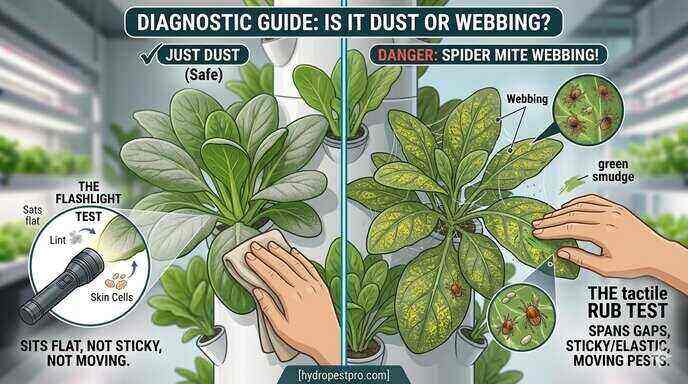
- The Flashlight Test (Check the Leaf Angle): Shine a bright LED flashlight horizontally across the top of your canopy in a darkened room. Static household dust sits flat, dead, and uniform directly on the leaf surface. Spider mite webbing spans across open gaps, stretching clearly from the leaf tip to the main stem or between separate leaves.
- The Underside Investigation: Look beneath the leaves directly under the suspected film. Real dust rarely collects on the bottom of a leaf due to gravity. If you see tiny, moving yellow, green, or red specks accompanied by microscopic translucent eggs on the leaf undersides, you have mites.
- The Leaf Texture and Color (Stippling): Inspect the green tissue itself. Dusty leaves remain completely solid green underneath the grime. Leaves hosted by spider mites will show hundreds of tiny, bleached-white or yellow pinprick spots (stippling) where the pests have physically sucked out the chlorophyll.
- The Tactile Rub Test: Gently roll a suspected leaf between your thumb and forefinger. Dust will feel dry, gritty, and will easily brush clean away. Active spider mite webbing will feel slightly elastic, slightly tacky, and will often smear into a faint green or yellow streak if you accidentally crush the microscopic mites feeding within it.
Read More: Step-by-Step Guide to Washing Spider Mites Off Vertical Grow Systems
The 3-Step Clean Organic Treatment Plan
If your diagnostic check confirms you are dealing with an active pest web rather than a dusty room, you must eliminate them without using harsh chemical pesticides that can drip into your water, throw off your nutrient pH, or unbalance your reservoir’s PPM:
Step 1: The Mechanical Foliar Sponge-Down
Before applying any sprays, take a clean, damp microfiber cloth or a soft sponge soaked in pure, pH-balanced water. Gently wipe every leaf from the base to the tip, focusing heavily on the undersides. This manual action physically breaks down the protective silk shelters, crushes thousands of adult mites, and clears the leaf surface so follow-up treatments can make direct contact with remaining eggs.
Step 2: Mist with an Organic Suffocation Wash
Mix a mild, system-safe solution of pure, cold-pressed neem oil or a plant-derived essential oil wash (like peppermint or rosemary oil) with a few drops of organic, non-detergent soap. Spray the entire plant until it is dripping wet. This organic barrier blocks the breathing spiracles of the arachnids, smothering them instantly without leaving chemical toxins that can pollute your hydroponic water lines.
Step 3: Introduce Subsurface Beneficials
Deploy live predatory mites, specifically Phytoseiulus persimilis, directly onto the foliage. These tiny beneficial insects thrive in dense canopies. They will systematically hunt down, pierce, and drain every remaining spider mite and hidden egg, providing an automated cleanout that is completely safe for indoor spaces.
Pro Prevention Habits for Spotless Hydro Canopies
Once your plants are clean and thriving again, implement these professional cleanroom habits to ensure neither dust nor destructive mites can threaten your system again:
- Upgrade to a HEPA Intake Filter: Never run an open duct as your fresh air intake. Install a high-efficiency particulate air (HEPA) filter or a specialized carbon filter sock over your intake fan to stop both wandering outdoor pests and household dust from ever entering your grow tent.
- Sanitize Structural Equipment Between Cycles: When your harvest is finished, completely drain your system. Wipe down the tent walls, light reflectors, and the outside of your reservoirs with a 10% food-grade hydrogen peroxide solution to sterilize hidden resting spots.
- Keep Canopy Humidity Stable: In my indoor tent, I found that maintaining a stable relative humidity between 55% and 60% during the vegetative stage completely cripples the spider mite’s reproductive cycle, as they require hot, bone-dry air to hatch their eggs efficiently.
- Wash Your Hands and Change Clothes: Never walk straight from tending an outdoor garden or handling store-bought houseplants directly into your cleanroom hydroponic area. Make it a habit to change your shirt to avoid acting as a personal transport system for hitchhiking pests.
Frequently Asked Questions
Can a regular vacuum cleaner remove spider mite webbing?
Absolutely not. Using a household vacuum cleaner on delicate hydroponic leaves will easily bruise the plant tissue, tear the roots out of their net cups, and spread live mites throughout your grow room via the vacuum’s exhaust stream. Stick to gentle manual wiping and water rinses.
Will spider mite webbing harm my hydroponic root system?
Spider mites live and feed exclusively on the green foliage and stems of your plants, so you won’t find them living down inside your water reservoir or rockwool cubes. However, the damage they cause to the leaves will starve the roots of energy, eventually causing the root system to turn brown and rot.
How can I tell if the mites are dead after treating the webbing?
Dead spider mites lose their color, turn dark brown or black, and remain completely motionless under a jeweler’s loupe. If you brush the leaves and see absolutely zero movement over a 60-second period, your organic suffocation wash successfully did its job.
Conclusion
Distinguishing between simple household dust and early spider mite webbing is a skill that saves entire harvests. By utilizing simple diagnostic tools like the flashlight test and tactile rub test, you can accurately identify the threat, bypass useless cleaning steps, and implement immediate, reservoir-safe organic controls to keep your canopy clean and healthy.
Expert Tip: To create an effortless, permanent pest indicator in your grow room, keep a small, potted bush bean plant near your hydroponic intake. Bush beans are an absolute delicacy to spider mites. If any pests manage to bypass your intake filters, they will choose to colonize the indicator bean plant first, giving you a clear, early visual warning to treat your room before a single strand of silk ever touches your main hydroponic crop!