
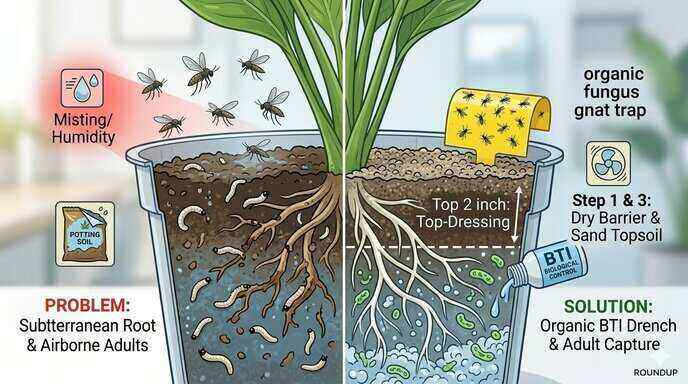
Few things match the frustration of watching a prized indoor plant suddenly drop its lower leaves, develop unexplainable yellow spots, or wilt despite a perfect watering routine. In an indoor setting, plants lack the natural resilience found in outdoor ecosystems. Because indoor soil and hydroponic setups are confined to pots and trays, any root-level stress hits the plant’s entire vascular network with alarming speed. Fungus gnats are frequently dismissed as a minor nuisance, but their microscopic larvae feed aggressively on delicate root hairs. If left unchecked, these hidden subterranean pests will systematically strip your plant’s ability to absorb food, causing it to stall out and wither away.
The primary mistake is ignoring the few adult flies buzzing around your pots until a multi-generational infestation is completely established. I’ve seen many growers struggle with declining plant health, unaware that a massive army of root-chewing maggots is thriving right beneath the surface. To immediately halt the reproductive cycle and eliminate adult flies before they drop thousands of new eggs into your media, take a look at our hands-on breakdown of the most effective organic fungus gnat traps for houseplants to clean up your indoor garden without chemicals.
Why Fungus Gnats Explode in Indoor Environments
Indoor grow spaces are highly optimized, climate-controlled environments. We deliberately maintain steady warmth, high humidity, and damp growing media to maximize plant growth. Unfortunately, these exact tropical parameters create an absolute paradise for fungus gnats. Without natural outdoor checks like heavy rain, cold snaps, or predatory insects, a single pregnant gnat can build a massive colony in weeks.
Most growers introduce these pests inadvertently. Fungus gnat eggs and larvae commonly hitchhike into homes inside low-quality, commercially bagged potting soils that were stored outside at garden centers. In hydroponic setups, they are often drawn to the thin layers of green algae that form on damp rockwool or coco coir plugs. The adult flies do not eat your plants; instead, they are purely attracted to decaying organic matter and moisture, making your warm, damp indoor pots the perfect nursery for their lifecycle.
Step-by-Step Identification: Pinpointing the Infestation
To save your root systems before permanent damage occurs, you must identify the presence of gnats early. Grab a magnifying glass and check these precise hiding spots:
- Erratic Crawling on the Media Surface: Look closely at the top layer of your soil or coco plugs. Fungus gnats are weak, clumsy flyers and spend most of their time darting across the damp surface of your growing medium.
- Translucent Larvae in the Root Zone: Gently peel back the top half-inch of soil or lift your starter plugs. The larvae are tiny, clear-to-white wormlike maggots with a shiny, distinct black head capsule.
- Loss of Root Gloss and Brown Tips: Pull a plant out of its pot to inspect the roots. Healthy roots should be crisp, white, and fuzzy. Larvae-damaged roots look stubby, chewed, and will turn a dull, slimy brown.
- Lower Leaf Yellowing and Stunting: Monitor the oldest leaves at the base of the plant. As larvae chew the roots, the plant lose its ability to draw up nitrogen, causing bottom leaves to pale, yellow, and drop.
Read More: Indoor Plant Fly Traps vs. Apple Cider Vinegar: Which Works Faster?
The 3-Step Safe Organic Soil-Cleaning Plan
You can completely purge fungus gnats from your soil or water culture without using harsh synthetic chemicals that burn fragile roots or throw off your reservoir’s delicate pH and PPM balances:
Step 1: Starve the Lifecycle with a Dry Barrier
Fungus gnat eggs and surface-dwelling larvae require constant, saturated moisture to survive. For soil or coco growers, let the top two inches of your medium dry out completely between waterings. If you are using rockwool or a hydroponic top-feed setup, temporarily reduce your watering frequency to dry out the top face of the medium, instantly dehydrating the shallow egg layer.
Step 2: Drench the Core with Microscopic Allies (BTI)
Mix a safe dose of Bacillus thuringiensis israelensis (BTI) into your clean, pH-balanced water. Soak your soil or hydroponic medium thoroughly. BTI is a natural, organic bacterium that produces a protein specifically toxic to gnat larvae. When the maggots eat it, it destroys their digestive tract from the inside out, yet it remains 100% safe for your roots and leaves your nutrient reservoir stable.
Step 3: Layer an Inhospitable Top Dressing
For soil-based indoor plants, apply a 1/4-inch layer of clean, coarse sand or fine horticultural grit directly on top of the soil. This gritty layer acts like a barrier of tiny glass shards. Adult gnats cannot burrow down through it to lay new eggs, and any newly hatched larvae attempting to emerge will get sliced, dried out, and stop dead in their tracks.
Pro Prevention Tips to Keep Your Garden Isolated
Once your medium is clean, adopt these proactive cleanroom habits to ensure fungus gnats never return to your indoor garden:
- Quarantine All New Additions: Treat any new houseplant or clone brought into your home as a potential threat. Keep it in an isolated room for at least two weeks to ensure no hidden eggs hatch into your main grow space.
- Seal Raw Media in Airtight Bins: In my indoor tent, I found that storing opened bags of soil, coco, or perlite in heavy-duty plastic tubs with locking lids completely stopped wandering adult gnats from nesting in my fresh supplies.
- Maximize Surface Air Movement: Position a small, oscillating clip-on fan to blow air directly across the top of your pots. This constant breeze creates a turbulent wind barrier that makes it physically impossible for weak-flying gnats to land and breed.
- Sanitize Spills and Trays Immediately: Clean up any runoff water, spilled soil, or dead, fallen leaves from your grow trays promptly. Decaying plant matter sitting in stagnant puddles acts like an open invitation for pests.
Frequently Asked Questions
Can fungus gnats completely kill an established indoor plant?
While mature plants with massive root networks can tolerate a mild gnat population without dying, a heavy infestation will severely stunt their growth, ruin your yields, and create open root wounds that invite deadly fungal diseases like Pythium (root rot).
Why did my gnats return after I dried out the soil?
Drying the soil only kills the shallow eggs and younger larvae. The pupae and older larvae can dive deeper into the root ball where moisture remains. This is why you must combine drying cycles with consistent BTI drenches for at least three consecutive weeks to catch every generation.
Can I use dish soap drenches to kill the larvae in my soil?
No, avoid pouring dish soap or household detergents into your soil. Soap breaks down the natural waxy protective coatings on your plant’s roots, causing severe chemical burns, root death, and stripping away the beneficial soil microbiology.
Conclusion
Conquering a fungus gnat infestation inside your home doesn’t require turning your living space into a toxic chemical zone. By managing your moisture levels, intercepting adults with target color lures, and treating the root zone with organic biologicals, you can easily clean your medium while keeping your garden completely vibrant and safe.
Expert Tip: If you want a quick, zero-cost way to check how bad your subsurface gnat larvae population actually is, cut a raw white potato into thick slices and press them flat into the top of your soil. Leave them overnight. Larvae find raw potato irresistible and will crawl out of the soil to swarm the bottom of the slice by morning. Check the slices every 24 hours, discard the maggot-covered pieces, and you will dramatically lower their numbers while tracking your treatment’s success!