
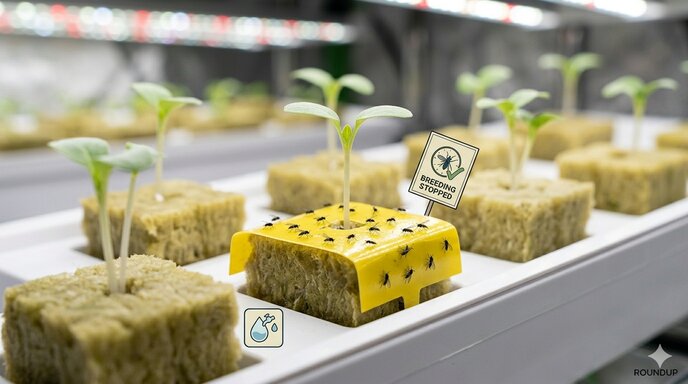
Few things match the sudden sting of watching a batch of vibrant, newly sprouted seedlings unexpectedly lose their rigidity, tip over, or develop unexplainable pale spots on their first true leaves. In a young soil-less system, your emerging plants are exceptionally fragile. Because seedlings lack a developed, woody stem or an expansive root network, a sudden insect intrusion threatens their entire life cycle immediately. Fungus gnats may look like harmless, clumsy little flies buzzing around your lights, but their microscopic underground larvae actively devour the tender root hairs of young sprouts. Left unchecked, they will systematically hollow out your crop’s root base before it ever gets a chance to truly establish.
The primary error is ignoring the adults until a massive, multi-generational infestation takes root under the canopy. I’ve seen many growers struggle with stalled seedling growth, completely unaware that hundreds of tiny maggots are chewing away the subterranean foundations of their garden. To break this destructive reproductive cycle safely and bring down adult flying populations before they deposit thousands of new eggs, you should explore our vetted hands-on review of the Best Sticky Traps for Fungus Gnat Control in Small Indoor Gardens to clean up your seedling trays instantly.
Why Fungus Gnats Target Indoor Seedling Stations Specifically
Indoor seedling setups are optimized environments designed to push gentle seeds into rapid, healthy growth. We deliberately lock in high relative humidity, consistent warmth, and micro-moist root substrates to encourage easy germination. Unfortunately, these exact tropical parameters also create a synthetic paradise for fungus gnats. Without outdoor natural predators like predatory mites, rove beetles, or shifting weather patterns to check their numbers, a couple of rogue gnats will breed exponentially.
Many growers introduce these pests inadvertently through contaminated coco coir bricks or damp starter plugs stored in open outdoor bags. Once inside, the adult flies are attracted to the algae layers and constant moisture typical of hydroponic propagation domes. The adults do not bite your plants; instead, they seek out the wet micro-climate of your rockwool or starter cubes to lay hundreds of eggs. Within days, hungry larvae emerge, actively searching for organic matter and tender young root systems to chew on.
Read More: Why Do Indoor Plants Get Fungus Gnats?
Step-by-Step Identification: Locating Gnat Hotspots
To save your seedlings before their root systems are completely severed, you need to know exactly where to spot the early warning signs. Grab a jeweler’s loupe and inspect these key zones every morning:
- Weak, Erratic Flyers Near the Media: Watch the surface of your starter blocks. Fungus gnats are terrible, jerky flyers that typically crawl over damp rockwool or coco plugs rather than flying high in the air.
- Translucent, White-Bodied Maggots: Peer closely into the cracks of your propagation media or near the drainage holes of your trays. The larvae have clear-to-white wormlike bodies with a distinct, tiny black head capsule.
- Sudden Yellowing and Stalled Growth: Examine the cotyledons (the first baby leaves). If they turn pale yellow or look stunted despite perfect nutrient PPM, check the roots for physical insect feeding damage.
- Brown, Nibbled Root Tips: Lift your starter plugs out of the tray channels. Healthy seedling roots must be bright white and fuzzy. If you see short, stubby, brown-tipped roots, larvae are actively feeding on them.
The 3-Step Safe Organic Treatment Plan
To completely wipe out a fungus gnat population without using chemical residues that twist fragile seedling tissue or unbalance your reservoir’s delicate pH, follow this targeted action plan:
Step 1: Deploy Visual Insect Traps
Immediately place yellow adhesive cards horizontally directly on top of your seedling trays, right at the canopy level. Because fungus gnats are naturally drawn to the specific color spectrum of these cards, they will fly straight into them and stick. Capturing adult flies is critical because it instantly stops them from laying new eggs in your media.
Step 2: Drench the Media with Beneficial Bacteria (BTI)
Mix a mild, seedling-safe dose of Bacillus thuringiensis israelensis (BTI) into your clean, pH-balanced water. Soak your starter cubes thoroughly with this solution. BTI is a natural, organic soil bacterium that specifically target and destroy gnat larvae from the inside out when eaten, yet it is 100% safe for bare root systems and leaves your water chemistry stable.
Step 3: Dry Out the Top Layer Safely
Fungus gnat eggs require absolute, saturated moisture to hatch. Pull off your humidity domes as soon as your seeds sprout, and allow the top few millimeters of your growing media to dry out slightly between mistings. This dry barrier completely dehydrates any shallow eggs and stops adult flies from burrowing downward to drop new batches.
Pro Habits to Prevent Gnat Re-Entry
Once you purge the active gnat generation from your propagation zone, stick to these long-term preventative habits to protect future seedling runs:
- Install Ultra-Fine Intake Screen Mesh: Cover your tent’s intake vents with a micro-mesh screen to stop flying pests from being vacuumed indoors from the outside world.
- Store Raw Growing Media in Sealed Tubs: In my indoor tent, I found that transferring opened bags of rockwool, clay pebbles, or coco coir into heavy-duty plastic bins with airtight lids permanently blocks hitchhiking bugs from nesting in my supplies.
- Sterilize Propagating Trays Between Cycles: Always scrub down your plastic cell inserts, domes, and reservoirs with a 10% hydrogen peroxide or isopropyl alcohol solution before starting a new batch of seeds.
- Keep Ambient Air Moving Across the Media: Position a small, gentle clip-on fan to blow air directly across the top of your starter plugs. This creates a turbulent wind zone that makes it physically impossible for weak-flying gnats to land and breed.
Frequently Asked Questions
Will fungus gnat larvae kill my seedlings completely?
Yes. Unlike mature, established plants that can tolerate mild root nibbling, young seedlings only have one or two primary roots. If gnat larvae chew through those main structural roots, the seedling will suffer from damping-off symptoms, tip over, and die rapidly.
Can I use neem oil sprays directly on young hydroponic seedlings?
No, avoid spraying heavy neem oil on fragile, newly sprouted seedlings. Neem oil is a thick, viscous substance that can easily smother the delicate, microscopic breathing pores (stomata) of young leaves, causing severe leaf burn under your grow lights and stunting early development.
How long does it take to completely get rid of a gnat outbreak?
Because the typical gnat life cycle lasts roughly 3 to 4 weeks depending on room temperature, you must maintain your yellow traps and BTI water treatments for at least 21 days straight to ensure you capture every single generation as it hatches.
Conclusion
Protecting young seedlings from a fungus gnat invasion requires speed and a gentle touch. By focusing your defense on capturing the egg-laying adults with sticky cards while treating the media with natural BTI bacteria, you can safeguard your plants’ roots without introducing harsh chemical stresses.
Expert Tip: If you are using loose coco coir or perlite mix for your indoor seedlings, try adding a 1/4-inch layer of clean, dry aquarium sand or fine horticultural grit directly on top of your starter plugs. This coarse sand layer acts like a physical barrier of microscopic glass shards to the gnats. Adult flies cannot dig through it to lay eggs, and any hidden larvae trying to crawl out will get dehydrated and perish, instantly stopping the infestation without altering your reservoir’s PPM.