
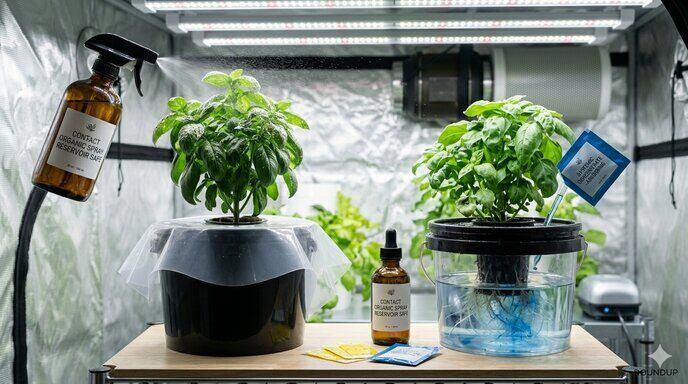
Few things match the frustration of walking into an indoor grow room to find a thriving, vibrant crop suddenly showing speckled yellow spots or unexplainable leaf wilt. In a soil-less system, your plants lack the soil buffer that helps absorb shocks, meaning a sudden pest outbreak targets the soft, fast-growing tissue immediately. Because hydroponic crops are completely dependent on your nutrient water, choosing the wrong remedy can lead to an instant disaster. A single misstep can easily choke out your roots, unbalance your water chemistry, or introduce toxic chemical compounds right into the food you intend to harvest.
The underlying issue stems from how a pesticide interacts with your system’s anatomy. I’ve seen many growers struggle with selecting treatment methods, inadvertently dumping heavy, non-soluble oils directly into their setups and suffocating their root systems. For water-based cultivation, utilizing localized, fast-acting formulas that stay on the leaves rather than penetrating the water line is paramount. If you are currently dealing with a sudden outbreak and need immediate control, you should explore our vetted collection of the best organic knockdown remedies for hydroponics to eliminate invasive insects instantly without leaving behind a persistent toxic sludge in your buckets.
Why Pest Controls Behave Differently in Indoor Hydroponics
Indoor grow tents are optimized environments meant to maximize harvest yields, keeping humidity and temperatures in a perfect sweet spot. Unfortunately, these exact parameters also create a synthetic paradise for opportunistic pests like spider mites, thrips, and fungus gnats. Without outdoor natural predators like ladybugs or lacewings to intervene, a small infestation escalates rapidly.
Many hobbyists introduce these bugs into sterile systems through contaminated clones acquired from local swaps, or by carrying hitchhikers inward on their daily clothing. When you apply a treatment in a water culture setup, anything left behind has a direct highway to the root zone. Systemic pesticides work by absorbing into the plant’s vascular tissue, making the entire plant poisonous to insects. However, in hydroponics, systemics linger heavily in the nutrient water, risking root chemical burns. Conversely, contact organic remedies destroy the bugs physically on the foliage and break down rapidly under your grow lights, making them exponentially safer for a closed water loop.
Step-by-Step Identification: Evaluating the Danger Zones
Before selecting your organic weapon, you must identify exactly what you are fighting and evaluate where the pests are harboring. Grab a high-power jeweler’s loupe and inspect these critical hotspots:
- The Undersides of Broad Leaves: Flip over your oldest leaves. Pests hide away from the harsh glare of overhead grow lights to deposit their microscopic, translucent eggs.
- The Rockwool Base or Net Pot Rim: Examine the damp surface of your starter cubes or clay pebbles. Fungus gnats flock to these moist surface zones to deposit larvae that target delicate root hairs.
- The Vascular Crown Junctions: Look closely at the tight nooks where branches split from the main stem. If you see very fine, glassy silk webs, an active spider mite population is expanding.
- Bare Root Color and Texture: Lift your net pots out of the reservoir. Healthy roots must be pearly white and crisp; if you observe a slimy brown coating, oily pesticide runoff has already begun to rot your system.
The 3-Step Safe Organic Treatment Plan
To completely purge an active insect breakout without causing your reservoir’s pH or PPM to wildly fluctuate, execute this clean foliar treatment routine:
Step 1: Shield the Reservoir Bed
Never assume your spray path will stay entirely on the leaves. Cut a slit into a clean plastic trash bag or use plastic food wrap to form a temporary collar covering the entire net pot and reservoir lid. This simple step guarantees that zero overspray or dripping liquid can taint your clean water system.
Step 2: Apply a Dissipating Contact Spray
Utilize a clean, fine-mist pressure sprayer filled with a water-soluble botanical contact wash. Thoroughly drench the canopy from the ground up, ensuring you hit the hidden undersides of every leaf. Because these organic compounds kill strictly on contact through suffocation or membrane disruption, complete physical coverage is non-negotiable.
Step 3: Execute the “Lights Out” Window
Always apply your organic sprays within 15 minutes of your grow lights turning off for the dark cycle. If you spray while your high-intensity LEDs or HPS lights are running hot, the water droplets will act like microscopic magnifying lenses, causing irreversible leaf tissue scorch and burning. A dark window allows the organic mixture to remain damp and active against pests before naturally evaporating away clean.
Pro Habits to Protect Your Clean Water System
Once you restore balance to your grow space, build these permanent habits to keep your facility isolated from future threats:
- Deploy Yellow Sticky Stakes: Position rigid adhesive cards directly above your reservoir lids. While they do not cure an existing breakout, they act as an indispensable early alert system by capturing scouting adults before they lay eggs.
- Install Fine Air Filtration: Secure a high-quality insect screen or a dedicated filter sleeve over your tent’s air intake fans to stop outdoor flying pests from getting pulled directly into your grow room.
- Enforce Cleanroom Practices: In my indoor tent, I found that maintaining a dedicated pair of indoor-only shoes and washing my hands thoroughly before touching any component drastically reduced contamination rates.
- Sanitize Equipment Weekly: Wipe down your reservoir rims, air lines, and pruning shears using a 70% isopropyl alcohol solution between water changes to break down lingering pathogen spore paths.
Read More: How Often Can You Spray Liquid Pyrethrin Before Hydroponic Herb Harvest?
Frequently Asked Questions
Will organic foliar sprays alter my reservoir’s pH levels?
If you shield your net pots during application, your reservoir water will remain completely untouched and stable. However, if organic solutions drip directly into your nutrient water, they will degrade, triggering severe bacterial blooms that crash your pH overnight and strip your water of vital dissolved oxygen.
Can I run systemics through my DWC or NFT water lines?
No, you should never put concentrated systemic pesticides directly into a hydroponic reservoir. Because there is no soil substrate to bind or break down the chemical compounds, the bare root system will absorb them at a toxic rate, which routinely stunts growth and leaves dangerous chemical residues inside your edible herbs.
How often should I repeat a contact organic application?
A single spray only destroys live, active insects; it will not destroy unhatched eggs. To successfully interrupt their breeding cycle, you must repeat the treatment sequence once every three days for a minimum of two consecutive weeks to catch newly emerging larvae.
Conclusion
When defending an indoor hydroponic garden, localized contact treatments are always superior to persistent systemic options. By treating the leaf surface while keeping your root environment isolated and clean, you can eliminate invasive bugs effortlessly while preserving your water chemistry.
Expert Tip: If you notice a stray, shiny oil slick accidentally floating on your water surface after a heavy foliar treatment, do not dump chemicals to disperse it. Instead, take a clean, dry sheet of unscented paper towel and gently lay it flat across the water surface. The hydrophobic oils will stick to the paper fibers instantly, allowing you to lift the film right out of your reservoir without altering your PPM balance.