
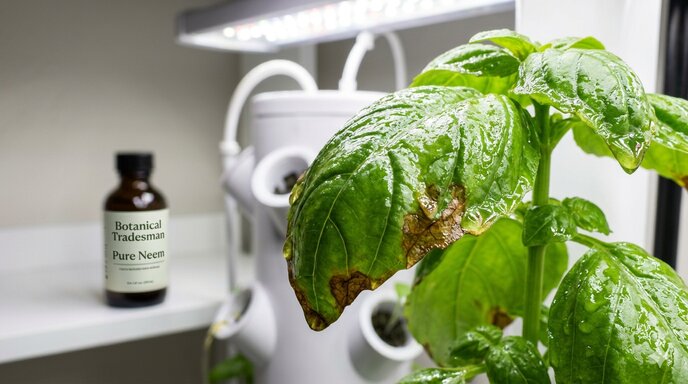
It is a nightmare every indoor grower knows: you walk into your grow room, and your prized basil or kale is suddenly covered in tiny, moving specks. In a hydroponic system, a minor pest problem can turn into a full-blown crisis overnight because there are no natural predators to slow them down. In a rush to save the crop, many growers reach for the neem oil and start spraying—hard. But in my experience, “more” is definitely not “better” when it comes to botanical oils.
Over-applying neem can actually suffocate your plants faster than the bugs do, leading to leaf burn and clogged stomata. This is especially true in tightly packed, stacked setups where heavy, oily residues can easily linger on the foliage and choke out the roots below. For these delicate configurations, integrating clean, residue-free organic spider mite treatments for vertical systems is a much safer alternative to heavy sprays, protecting your high-density canopy while successfully wiping out the colony.
What happens if you spray too much neem oil on plants?
Finding the Right Balance
The key to success isn’t drenching the plant until it’s dripping; it’s about using a high-quality, pure concentrate that you can control. I’ve found that using Botanical Tradesman Neem Oil allows you to mix the exact strength you need without the mystery fillers found in some big-box brands. If you want to see why I prefer this specific DIY concentrate for my vertical towers, you can read my full, honest review of it here. Using the right oil in the right dose is the difference between a saved harvest and a greasy, dying mess.
Why “Over-Spraying” is a Hydroponic Hazard
In an indoor hydroponic tent, we manage a very delicate balance of light, humidity, and airflow. When you spray too much neem, the oil doesn’t just sit there; it creates an airtight film over the leaves.
- Stomata Blockage: Plants “breathe” through tiny pores called stomata. Excessive oil plugs these holes, stopping the plant from releasing moisture and taking in $CO_2$.
- Light Magnification: Hydroponic grow lights are incredibly intense. A heavy layer of oil acts like a magnifying glass, focusing that light and literally frying the leaf tissue.
- Humidity Traps: In high-humidity environments, a thick oil coating can trap moisture against the leaf surface, inviting fungal pathogens like powdery mildew to take hold.
Read More: Can I spray peppermint oil directly on my plants?
Step-by-Step: Signs You’ve Gone Too Far
If you suspect you’ve overdone the treatment, look for these tell-tale signs immediately:
- Yellowing or “Bronzing”: The leaves may take on a weird, metallic tan or yellow color where the light hit the oil hardest.
- Drooping/Wilting: Despite having perfect nutrient levels in your reservoir, the plant looks thirsty because it can’t regulate its internal pressure.
- Sticky Residue on Walls: Look at your Mylar or grow tent walls; if they feel tacky, your spray was too heavy or the mist was too wide.
- The “Oily Slick” in the Reservoir: Check the top of your water near the net pots. If you see a rainbow film, you had too much runoff, which can coat your roots and suffocate them.
The 3-Step Organic Rescue Plan
If your plants are looking greasy and stressed, follow this plan to clean them up without throwing off your reservoir’s pH or PPM.
- The Gentle Rinse: Use a spray bottle filled with plain, lukewarm distilled water to gently mist the leaves and break up the excess oil.
- Dab, Don’t Scrub: Use a soft microfiber cloth to gently pat away the heaviest oil beads. Focus on the undersides where the stomata are most concentrated.
- Dim the Lights: Turn your grow lights down to 50% or raise them higher for 24 hours. This gives the plant a “rest” while it recovers from the oil-induced heat stress.
Pro Habits for Future Prevention
In my indoor tent, I’ve learned that consistency beats intensity every time.
- Use Sticky Traps: Use yellow cards near your rockwool to catch the first few gnats before you feel the need to spray the whole canopy.
- Intake Filtration: Ensure your intake fans have fine mesh filters to keep out hitchhiking pests from the start.
- Tool Sterilization: Always wipe your pruning shears with alcohol between plants to prevent spreading invisible eggs.
- Scheduled Monitoring: Use a jeweler’s loupe to check the undersides of leaves twice a week. Catching a problem early means you only need a light mist, not a heavy drench.
FAQs
Will too much neem oil kill my plants?
Yes, it can. If the oil is thick enough to stop transpiration and you keep your lights at full blast, the plant will suffer from “oil burn” and eventually die.
Can I wash neem oil off with soap?
Only use a very tiny amount of mild, castile soap (like Dr. Bronner’s). Too much soap can be just as damaging to the leaf’s protective waxy coating as the oil itself.
How often should I actually spray?
For an active problem, once every 3–5 days is plenty. For prevention, once every two weeks is the “sweet spot” I’ve found in my own vertical systems.
Conclusion
Neem oil is one of the best tools in our organic arsenal, but it demands respect. Treat it like medicine: the right dose heals, but an overdose causes a whole new set of problems.
Expert Tip: Always spray your plants right after the lights go out for the night. This gives the oil 8 to 12 hours to dry and work its magic before the intense “sun” of your grow lights returns to potentially burn the leaves.