
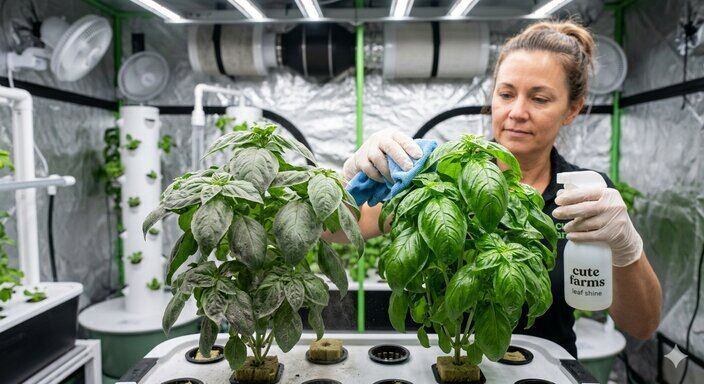
It is incredibly frustrating to watch a meticulously balanced hydroponic system produce plants that look “tired” despite perfect nutrient levels. In an indoor garden, dust isn’t just an aesthetic annoyance; it is a physical barrier that suffocates your plants. When a layer of household grime settles on the foliage, it blocks out the critical photons from your grow lights and clogs the stomata—the tiny pores through which your plants breathe.
In my indoor tent, I’ve seen many growers struggle with stunted growth simply because they ignored leaf hygiene. I found that using a specialized cleaner that adds nutrients while removing dust is a much more efficient approach than water alone; you should check out my honest review of Cute Farms Leaf Shine Spray to see how it effectively feeds the foliage while restoring that vital, light-catching luster.
Why “Cleanliness” Matters More Indoors
In a soil-less system, we are pushing plants to their maximum growth potential. However, without the wind and rain found in nature to physically “wash” the plant, dust accumulates rapidly.
Furthermore, indoor environments often have stagnant air, which allows dust to settle in thick layers. This creates a secondary problem: pest camouflage. Pests like spider mites and thrips love to hide under a layer of dust, where they are protected from your eyes and your organic sprays. If your leaves are dirty, you are essentially giving invaders a safe haven to reproduce.
Step-by-Step Identification
If you suspect your “leaf hygiene” is impacting your harvest, look for these specific signs:
- Dull or Grayish Tint: If your vibrant green leaves look “matte” or dusty, they are likely struggling to absorb light.
- Sticky Residue: Look closely at the leaf surface; if dust is sticking to “honeydew,” you have an active pest colony.
- Stunted Top Growth: Check the newest leaves at the very top of the plant. If they are smaller than the ones below them, the plant is lacking the energy for new expansion.
- Slow Stomata Response: If your plants are wilting during the “lights-on” cycle despite having plenty of water, their pores may be physically blocked by debris.
3-Step Organic Cleaning Plan
You can restore your plant’s health without risking your reservoir’s pH or PPM stability.
- The Dry Dusting: Use a soft micro-fiber cloth or a very soft brush to gently remove the loose dust. This prevents you from just turning the dust into “mud” when you apply your spray.
- Foliar Nutrition Application: Mist the leaves with an organic shine spray that contains NPK minerals. This allows the plant to absorb nutrients through the newly cleaned pores almost instantly.
- The Underside Wipe: Never forget the bottom of the leaf. This is where the highest concentration of breathing pores (stomata) are located. Wiping the undersides ensures maximum gas exchange.
Pro Habits for Prevention
- Intake Filtration: Use a high-quality pre-filter on your tent’s intake fan to catch dust before it ever reaches your plants.
- Oscillating Fans: Keep air moving through the canopy. This prevents dust from settling and makes it much harder for pests to land.
- Regular Misting: A light misting with plain, pH-balanced water every few days helps keep dust from “bonding” to the leaf surface.
Read More: How to Deal with an Emergency Spider Mite Breakout in DWC Hydroponics?
FAQs
Can I just use tap water to clean my leaves? In many areas, tap water contains calcium and minerals that leave “hard water spots.” These spots can actually block light just as badly as dust. Use distilled water or a professional spray to avoid this.
Is it okay to clean leaves during the flowering stage? Be extremely careful. You should never spray oils or heavy cleaners directly on developing buds, as this can lead to mold. Focus only on the large fan leaves.
How often should I clean my hydroponic leaves? I recommend a thorough cleaning every 10–14 days. If you live in a particularly dusty area or have pets, once a week is even better for maintaining peak growth rates.
Conclusion
A clean plant is a productive plant. By treating leaf hygiene as a core part of your nutrient strategy rather than just “housekeeping,” you ensure your garden is capturing every bit of light you provide.
Expert Tip: After you finish cleaning a leaf, hold it up to your grow light. You should see a slight translucence and a healthy shine. If it still looks cloudy, your stomata are likely still blocked, and you may need a second, more thorough wipe.