
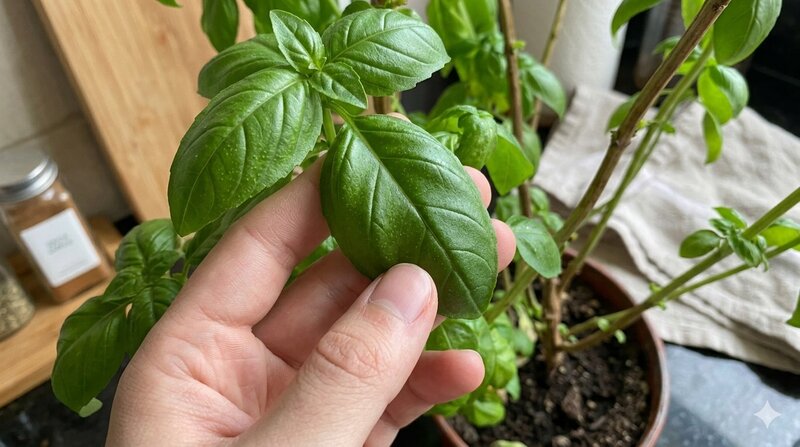
There is nothing quite like the smell of fresh, peppery basil in an indoor grow tent, but that joy quickly turns to frustration when you touch a leaf and your fingers come away covered in a mysterious, tacky film. If your basil leaves feel like they’ve been sprayed with soda, you aren’t looking at a nutrient leak.
You are likely dealing with “Honeydew,” a sugary waste product excreted by sap-sucking pests like aphids, whiteflies, or scale. In a soil-less system, these pests are a massive threat because they reproduce at lightning speed in our controlled, warm environments. Their sticky residue can quickly lead to Sooty Mold—a black fungus that blocks photosynthesis and can kill your entire harvest if left unchecked.
I’ve seen many growers struggle with this, and the first instinct is often to panic-spray harsh chemicals. Instead, I usually suggest starting with a specialized botanical wash to clean the leaves and stop the cycle; you can see exactly how it handled my own aphid breakout in my honest review of the Smart Grower Botanical Blend. It’s a great way to cleanse that sticky mess without ruining the flavor of your herbs.
Why This Happens in Indoor Hydroponics
In an indoor tent, we create a “perfect” world for plants, but we also create a paradise for pests. Without ladybugs or lacewings to keep populations in check, a single aphid hitchhiking on your clothes or a new “clone” can become a colony of thousands in a week.
High humidity and stagnant air around your basil’s dense canopy allow honeydew to sit on the leaves rather than drying out. This creates a literal breeding ground for secondary infections that can travel down your stems and eventually rot your rockwool or coco coir.
How to Identify the Culprit
To fix the stickiness, you have to find the bug. Here is exactly where to look:
- The Underside Shuffle: Flip over the top-tier leaves. You’ll likely see tiny, pear-shaped aphids (green or black) or small, white “dust” that flies away—those are whiteflies.
- Stem Clusters: Check the “nodes” where the leaves meet the main stem. Pests love these protected joints.
- The “Cast Skins”: Look for tiny, white, flakey specks on the sticky surface. These are the discarded skins of growing aphids.
- Ant Activity: If you see ants in your hydroponic tray, they are likely “farming” the aphids for that sweet honeydew.
The 3-Step Organic Treatment Plan
You can clear this up without throwing your reservoir’s pH or PPM out of balance.
- The Physical Rinse: Take your basil plants to a sink. Using lukewarm water and a gentle stream, wash the sticky honeydew off the leaves manually. This physically removes the majority of the pests and their waste.
- Apply a Botanical Barrier: Once the leaves are dry, use a refined neem or essential oil spray. These coat the remaining pests and prevent them from breathing. Always spray during the “lights out” cycle to prevent leaf burn from your LEDs.
- Shield the Reservoir: Place a plastic cover or towel over your net pots during treatment. This ensures no soap or oil drips into your water, which can cause foaming in your air stones.
Pro Habits for Prevention
- Yellow Sticky Traps: Hang these at canopy level. They act as an “early warning system” so you catch the first few flyers before the stickiness starts.
- Strict Quarantine: Never bring a plant from a local nursery directly into your hydro tent. Keep it in a separate room for 14 days to check for “hitchhikers.”
- Dedicated Tools: I keep a specific set of pruning shears just for my indoor tent and wipe them with alcohol between every use.
- Airflow is King: Ensure you have a small oscillating fan blowing through the basil canopy to make it harder for pests to land and stay.
FAQs
Is the sticky stuff toxic to humans? The honeydew itself is just sugar water, but you shouldn’t eat it. It’s often contaminated with bug waste and can harbor mold. Always wash your basil thoroughly before use.
Will the bugs get into my water reservoir? Usually, no. These pests want the nitrogen-rich sap in the leaves. However, if they fall into the water, they can die and rot, which contributes to bacterial growth and root rot.
Can I just prune the sticky leaves off? If it’s just one or two leaves, yes. But if the whole plant is sticky, heavy pruning will stress the basil and stunt its growth. It’s better to wash and treat the existing foliage.
Conclusion
Sticky basil is a sign that your indoor ecosystem is slightly out of balance, but it isn’t a death sentence for your garden. Address the pests early, clean the leaves, and your basil will bounce back.
Expert Tip: After you’ve treated the plants, keep a close eye on your nutrient pH for the next 48 hours. Even a tiny bit of organic spray drifting into the water can cause a slight spike that you’ll want to correct immediately to keep your growth on track.